Category

Finance

Finance

String Metaverse (Bio Green Papers, BSE: 534535) Reports Q1 FY25: Rs 50.02 Cr Revenue, Rs 5.38 Cr PAT

String Metaverse LTD, following its merger with Bio Green Papers Limited (BSE: 534535) as approved by the Honourable National Company Law Tribunal (NCLT) under the scheme of arrangement of the Insolvency and Bankruptcy Code (IBC), has reported robust financial results for the first quarter of FY 2025. The company achieved consolidated revenue of Rs 50.02 crores and a profit after tax (PAT) of Rs 5.38 crores.

Backed by Spacenet Enterprises LTD (NSE: SPCENET) and 63 Moons Technologies Ltd (NSE: 63MOONS) step down subsidiary 3.0 VERSE Ltd. investments, String Metaverse will be the first Web 3.0 enterprise to start trading on BSE main board.

String Metaverse has global offices in Gift City, Hyderabad, UAE and HK.

The merger has strengthened the company’s position, leading to a consolidated revenue of Rs 151.21 crores and a PAT of Rs 10.82 crores for FY 2024, highlighting the successful integration and growth potential of the combined entity.

The Evolution Web 3.0

Web 1.0: Primarily focused on email and messaging, laying the foundation for digital communication.

Web 2.0: Marked by centralized social communities such as Instagram, Facebook, and WeChat, where monetization is predominantly controlled by large corporations like Meta, Microsoft, and Google.

Web 3.0: Digital communities are created for the people and by the people, enabling users to share, create, and transact within decentralized communities.

“In this new age of the Attention Economy, individuals are rewarded for the time they spend engaging online, transforming their attention and time into digital assets”

“New technological innovations are set to dominate global equity market caps. Disruptive technologies such as Web 3.0’s ‘Public Blockchains,’ Energy Storage, Artificial Intelligence, and Robotics currently have a combined market cap of approximately USD 19 trillion. This is expected to grow to USD 220 trillion by 2030, in contrast to non-innovative companies, whose combined market cap is projected to grow from USD 98 trillion to USD 140 trillion” according to a research report by ARK Investment.

“With Web 3.0 and Next-Generation technologies growing at an unprecedented pace, we are confident of achieving a CAGR of 100 per cent growth for the next 3 years,” stated Krishna Mohan Meenavalli, Founder of String Metaverse Ltd.

Continue reading
Finance

Satyendra Kumar Analyzes India’s 2024-2025 Financial Budget at FinTech Conclave

Meerut, 24 July 2024 – Renowned leader Satyendra Kumar delivered an insightful analysis of India’s Union Budget for the fiscal year 2024-2025 at the FinTech Conclave held in Meerut, Uttar Pradesh. Drawing on his extensive experience, Kumar provided a detailed evaluation of the budget’s focus on infrastructure development, fiscal stability, and social welfare.

Infrastructure and Capital Expenditure

Kumar highlighted the budget’s significant allocation of ₹10 lakh crore for capital expenditure, a 33% increase from the previous year. He emphasized the potential of this investment to drive economic growth through infrastructure development, particularly in transportation, energy, and urban development sectors. Kumar noted that these efforts are expected to generate employment and enhance productivity.

Fiscal Deficit and Economic Stability

Discussing the fiscal deficit target of 5.9% of GDP, Kumar acknowledged the government’s commitment to maintaining fiscal discipline while supporting economic recovery. He addressed the challenges of achieving fiscal consolidation amidst global economic uncertainties and emphasized the importance of strategic planning.

Social Welfare and Rural Development

Kumar praised the budget’s prioritization of social welfare, with increased funding for healthcare, education, and rural development initiatives. He highlighted the importance of programs like the Mahatma Gandhi National Rural Employment Guarantee Act (MGNREGA) and food and fertilizer subsidies in supporting vulnerable populations and stimulating rural economies.

Agriculture and Technology

Kumar emphasized the budget’s focus on agricultural modernization and technological advancement, recognizing their crucial roles in boosting productivity and economic resilience. He pointed out the government’s support for startups and initiatives aimed at enhancing the digital economy as key drivers of future growth.

Environmental and Sustainable Initiatives

Addressing environmental concerns, Kumar applauded the budget’s measures to promote renewable energy and sustainable practices. He underscored India’s commitment to climate goals and the potential impact of investments in green technologies and clean energy projects.

Expert Insights

“India’s 2024-2025 budget sets the stage for sustainable economic growth by prioritizing infrastructure, technology, and social welfare,” said Satyendra Kumar. “This balanced approach addresses immediate needs while paving the way for long-term development.”

Kumar’s address provided valuable insights into the budget’s implications for various sectors and its alignment with India’s broader economic objectives.

Satyendra Kumar is a distinguished retired bureaucrat known for his expertise in public finance and economic policy. His extensive experience has been pivotal in shaping Indian financial strategies and promoting sustainable economic growth.

Continue reading
Finance

Preparing Your Finances for Life’s Unexpected Events with Short-Term Loans

Life is like a ride on a roller coaster that can make you lose all your money. Sometimes bad things happen, like getting sick, the car stopping work, or losing your job suddenly. When these things happen, we need money fast. That’s when instant personal loans help us a lot!

Therefore, this article discusses the significance of preparing your finances with these types of credits for unexpected life events. Additionally, it looks into what they are, how they work, and their benefits in the effective management of financial crises.

Understanding Short Term Loans

Short term loans simply refer to any credit facility that allows one to access money quickly over a shorter period, usually ranging from 3 to 15 months. Most commonly accessed through reputable NBFCs like lendingplate, these types of borrowings aim at catering for unforeseen expenses or filling temporary cash flow gaps until the next paycheck or source of income arrives.

Benefits of Short-Term Loans For Financial Emergencies

There are numerous benefits associated with using them as a means for managing financial emergencies effectively, which include:

1. Fast Cash: Instant personal loans and other options alike ensure that money reaches your hands within no time when needs get desperate. This comes in handy, especially during medical emergencies that require immediate funds or even house repairs, among others.

2. More than one repayment scheme: Depending on the economic capability of a debtor, there are many adaptable repayment plans. A few lenders allow their clients to make payments on a weekly basis, while others offer biweekly and monthly options, which help people manage their budgets easily.

3. Easy and accessible: Technology has made everything easier, including applying for a loan using an app. These days, one can get a short-term loan by downloading it on their mobile phone without necessarily having to go to the bank physically.

4. No security needed: Most short-term loans do not require any form of collateral; therefore, they accommodate more people. This provision assists those who do not own property but still require financial aid.

5. Helps Establish Credit: To establish credit, pay back your short-term loans responsibly because it will show up in your credit score with time, and good lenders know this as they see timely payments that prove the borrower’s financial responsibility.

6. Covers Unexpected Costs: Short-term loans can be used for medical bills, car repairs, and other unexpected expenses. This way, funds are availed quickly saving the person from financial strain and allowing them to handle emergencies promptly.

Financial emergencies can be managed confidently and peacefully if we have this idea about short-term loan benefits.

Responsibilities of Borrowers When Using Short-Term Loans

Even though there are many advantages to borrowing money over a brief period, there still needs to be some accountability on behalf of borrowers so that they use these privileges carefully.

Interest rates would be one thing, but also fees involved or when do you have to make these repayments? All these questions should come into play before signing anything.

Make sure that you always allocate enough money for repaying loans, since failure to do so may negatively affect your credit rating. This implies having cash set aside specifically meant for paying back what was borrowed plus interest, which might accumulate over time due to late payment penalties.

Sometimes people get excited about being given this opportunity and thus end up taking more money than necessary. As such, individuals should not take out any loan exceeding their income levels because once they fail to make timely repayments, it could lead them into deeper debts, hence ruining their prospects.

In case one is having a hard time paying back a loan, he or she should promptly talk to the lender about it so that they can discuss alternative options.

It is advisable to utilize short-term loans for real financial emergencies or necessary expenses rather than spending on things you can do without, like considering options such as an emergency loan.

An individual must check his/her credit score from time to time while also making an effort to improve it through responsible debt management.

Meeting these obligations helps borrowers get the most out of their short-term loans while staying financially secure.

Tips for Managing Immediately Due Loans Efficiently

To be able to manage short-term loans effectively, you need to plan well and be disciplined financially. Below are some pointers that should help guide borrowers in servicing their loan obligations:

* Have a detailed budget that incorporates the payment of loans among other important expenses.

* Make it a priority to pay off short-term debts and remain current with all your bills, including options such as an instant personal loan online.

* Use calendar alerts or reminders so as not to forget to make timely repayments, which may attract penalties due to lateness.

* Borrow only what is needed; avoid taking more debt than necessary unless compelled by circumstances beyond one’s control.

* When experiencing financial difficulties, talk to the lender about available choices for paying back or restructuring the loan terms.

* Keep monitoring your credit score regularly, along with reports thereof, to keep track of progress made while also identifying areas that need improvement.

Consider seeking advice from professional experts, such as financial advisors, who can offer personalized tips on how best one can manage his/her debts towards achieving better overall financial wellness.

Conclusion

All in all, these types of loans act as useful money tools during unexpected events and emergencies. Short-term borrowings through a personal loan app, including options like an instant loan, can be navigated with confidence through understanding their terms, duties, and benefits, as well as any associated responsibilities undertaken by the borrower. The importance lies in managing them effectively, where budgets should be drafted out for this purpose alone; repaying them immediately should take precedence over everything else, while alternative methods must also be considered whenever necessary. Monitoring credit scores and seeking financial advice when necessary are also essential steps towards maintaining financial stability. With these strategies in place, borrowers can use short-term loans responsibly to address immediate financial needs while working towards long-term financial health.
Continue reading
Finance

4 AI-Powered Bank Statement Analyzers for MSME Lending

India has over 6.3 milion MSMEs, with an unmet credit gap of 120 billion USD. According to 2024 Trans Union CIBIL report, only 2.5 million MSMEs have access to formal credit. MSMEs have a high demand for loans under 1 Lakh also known as small ticket loans. The lending process for such loans is often mired by traditional credit underwriting processes relying on credit histories and documentation such as Balance sheets, income statements, Cashflow statements etc.Lenders have adopted cutting edge AI fintech tools to streamline loan management for their loan products that follow the standard credit underwriting process. However, small ticket loans for MSMEs, come with unique and complex needs for credit underwriting. MSMEs have limited credit histories and prevalence of informal bookkeeping practices. This makes it difficult to provide the necessary documentation for lenders, especially for frequent, low-value transactions.

MSME lenders have to rely on year-long bank statements to analyze the financial health of their applicants. These bank statements run into hundreds of pages due to low-value transactions and often across different bank accounts. The credit operations teams of such lenders take an average of 1-2 days to analyze these bank statements. Therefore, MSME lenders need faster processing systems to address the underserved MSME segment. Here are 4 bank statement analyzers for MSME lenders, offering outstanding performance and superior reliability.

  1. Finuit

Finuit, the fintech division of Quantrium, is a growing fintech provider in India, building innovative, AI solutions for the global financial services industry. Finuit worked with small and regional MSME lenders to build their AI-powered Bank Statement Analyzer, a document intelligence tool that easily integrates into existing workflows. The Analyzer has a user-friendly interface, gleaning intelligence from bank statements as long as 200 pages within minutes. Their analyzer is customizable for the unique needs of MSME lenders and their credit underwriting processes. It derives cash flow stories of applicants by analyzing their bank statements across different bank accounts. It uses AI and NLP technologies to accurately extract data from bank statements of over 150+ different formats from all major National and regional banks of India. Their suite of intelligent document processing solutions for MSME lenders also includes Balance sheet analyzer, Cash flow statement analyzer, Income statement analyzer and ID verification tools to accelerate and streamline lending workflows.

Website: finuit.ai

Address:
NO: 37, 3rd Floor – Workafella (Room No: 311), TT Krishnamachari Road,
CIT Colony, Alwarpet,
Chennai, Tamil Nadu – 600 018.

  1. Perfios

Perfios is a global software solutions provider with expertise in software solutions for the BFSI sector in over 18 countries. They have a suite of data aggregation solutions for SME lending, that covers analysis of crucial documents such as Financial statement analysis, Bank statement analysis and GST documentation. They have data aggregation tools for consumer lending, Insurance and other BFSI segments. Established in 2008, their expertise and clientele has grown over the years to develop specialized services such as Fraud check and verification services, Obligation services, Income analysis for real time decisioning of creditworthiness.

Website: www.perfios.com

Address:
HM Vibha Towers, 5th Floor,
No.66/5-25, Hosur Road,
Above Star Bazaar, Adugodi,
Bangalore-560030

  1. Score solutions

A leading fintech provider in India, Score solutions offer paperless credit and analytics for BFSI institutions. Established in 2017, their clients are spread across India, with 6 new products launched over the past 3 years. They offer bank statement analysis alongside, GSTR, KYC, financial statement and legal data analysis for digital lending. Their SAMPAN tool is designed to simplify credit decisioning for MSME  by analyzing data available in public domains using PAN details of the applicant.

Website: www.scoreme.in

Address: 8th Floor Tower D, Pioneer Urban Square, Sector-62, Gurugram 122001

  1. Precisa

Precisa is a growing fintech provider in India that creates financial personas of entities from self submitted documents to enable access to finance for all. They offer bank statement analyzer, GSTR, credit report and account aggregator solutions, leveraging cloud based financial data analytics. They have support documents from 450+banks across 8 countries. They aim to democratize risk profiling for banks, NBFCs, wealth management and Insurance companies.

Website: precisa.in

Address:303, K L Accolade, Rd Number 6, T.P.S III,

Golibar,Santacruz East, Mumbai,

Maharashtra – 400055

Continue reading
Finance

Nxcar Leads Auto Fintech Innovation as the First Company to Introduce Loans for Peer-to-Peer Used Car Transactions

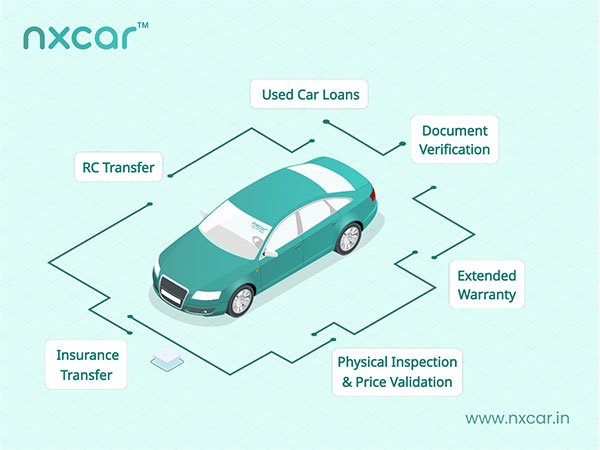
Gurgaon-based automotive fintech company, Nxcar, has launched an integrated platform for pre-owned car transactions in India. For the first time, individual customers can access loans, vehicle inspection, valuation, insurance, and RC transfer services, whether they are purchasing second-hand cars from individual sellers, dealers, or classified listings.

With 7.2 million cars expected to be sold in 2024, the Indian second-hand car market is 1.6 times larger than the new car market and is growing at a 15 per cent annual rate, according to an industry report by Mordor Intelligence. Over 60 per cent of first-time car buyers opt for used cars as their first four-wheeler. While it’s well-established that buying a pre-owned car is financially smart, the process of obtaining a loan for a second-hand car is often complicated, involving condition assessment, document verification, bank clearance, and RC transfer.

“Nxcar integrates various services on a single tech platform, making the experience of buying a used car as transparent and convenient as buying a new one from a showroom,” says Mani Singh, Co-founder and Director of Nxfin Technologies. According to Mani Singh, Nxcar offers loans, document checks, physical inspection, valuation, extended warranty, insurance, and RC transfer through a seamless online process. It has partnered with over 20 banks and NBFCs to ensure nationwide coverage and provide end-to-end used car loan origination and management.

Currently, Nxcar’s services are available in the metropolitan areas of Mumbai, Pune, Bangalore, Hyderabad, Kolkata, and across North India.

Traditionally, banks have been hesitant to finance pre-owned cars due to the complexities in asset valuation and ownership verification. Customers could only secure loans when buying from large aggregators or corporate dealers, often at a 20-30 per cent higher price compared to local purchases. Nxcar addresses these issues by providing a single point of validation for buyers, lenders, and insurance companies. Their inspection and valuation services also enable them to offer extended warranty packages on cars up to 10 years old, ensuring peace of mind for second-hand car buyers and added security for lenders.

Nxcar does not compete with dealers; instead, it facilitates faster car sales for dealers by providing their customers with easy access to loans, warranty, and insurance through the Nxcar platform.

Founded in 2022, Nxfin Technologies initially focused on supply chain finance for used car dealers, offering extended credit terms for acquiring resale cars and completing the first year of operations with over Rs 800 million in sales. Expanding to an integrated platform for loans and other services is a natural progression for the fintech, further empowering used car dealers to enhance their offerings and expanding the available pool of used cars to end customers.

Continue reading
Finance

Liferay and InfoAxon Join Forces to Drive Digital Transformation for Reliance General Insurance (RGI)

Liferay and InfoAxon are thrilled to announce their strategic partnership aimed at driving digital transformation for Reliance General Insurance (RGI). Together, we are set to revolutionize RGI’s digital landscape and deliver innovative digital journeys to its prospects and customers.

In collaboration with RGI, Liferay DXP, a leading Digital Experience Platform, and InfoAxon, a Digital Transformation Solutions provider, are embarking on a journey to transform RGI’s digital footprint across various channels. From engaging D2C digital journeys on the Website to Customer Portal, Agent portal, and microsites, powered by an innovative Customer Data Platform, the partnership promises to elevate RGI’s digital presence to new heights.

This partnership will empower RGI to swiftly deliver and scale personalized omnichannel experiences for its customers, agents, BANCA partners, OEM Partners, Tele agents, and Digital alliances through partners. By leveraging an innovative Data Lake (Customer Data Platform-CDP), real-time customer data will be converted into actionable insights, ensuring hyper-personalization and seamless digital experiences, thus fostering deeper engagement and boosting conversions.

Commenting on the partnership, Prabhdeep Batra, Chief Distribution Officer, Reliance General Insurance, expressed, “We are thrilled to embark on this digital journey with Liferay and InfoAxon. This strategic partnership marks a significant milestone in our quest to revolutionize the insurance landscape through innovation and technology. We are poised to deliver unparalleled digital experiences, driving deeper engagement and value for our customers and partners.”

“Liferay is proud to be part of RGI’s digital transformation journey,” said Manish Gupta, General Manager, India & SAARC, Liferay. “We remain committed to supporting RGI’s mission and future requirements to optimize operations and generate engaging digital experiences across channels.”

Liferay’s DXP platform facilitates and empowers enterprises with digital innovations and experiences in a quick and agile manner. Liferay DXP is one platform using which insurers can deliver multiple use cases across B2C, B2B and B2E channels.

“InfoAxon has built incredible momentum as the global go-to digital transformation partner for leading insurers. We welcome RGI as our esteemed customer and are excited to partner with them on their digital transformation journey”, said Vineet Dahiya, Co-founder at InfoAxon. “Based on our experience of working with global insurance organizations and our decade-old partnership with Liferay, we have developed a Digital Insurance Stack that accelerates insurance product launches with configurable buying journeys, maximizes digital distribution opportunities, and rapidly delivers engaging Omnichannel experiences. Leveraging our digital insurance stack, RGI will be able to create more touchpoints and more opportunities to engage with the customer, leading to more and better opportunities to sell, service, and retain”, he further added.

Reliance General Insurance

Reliance General Insurance, a subsidiary of Reliance Capital, is one of India’s leading general insurance companies. The Company offers a well-rounded and comprehensive bouquet of products including Motor Insurance, Health Insurance, Travel Insurance, and Home Insurance. It provides customized solutions to meet the protection needs of each customer. Reliance General Insurance has a robust network of more than 90,000+ intermediaries and 129 branches across India for offering its products and services to retail, corporates, and SME clients.

InfoAxon

Since its inception in 2001, InfoAxon has transformed how Banking, Financial Services, and Insurance (BFSI) sectors approach digital transformation. As their strategic partner, we help customers become ‘digital businesses’ by empowering them with agile digital architecture to deliver personalized omnichannel experiences at scale. We are working with some of the leading BFSI organizations helping them with unique capabilities to quickly launch frictionless omnichannel experiences with innovative features such as product configurator, configurable buying journeys, product comparison and recommendation, combo product journeys, intelligent nudges, etc. InfoAxon is Liferay’s oldest and only Gold Partner in India. To know more about how we can help you accelerate your digital journey, visit us at infoaxon.com

Liferay

Liferay helps organizations build for the future by enabling them to create, manage, and scale powerful solutions on the world’s most flexible Digital Experience Platform (DXP). Trusted globally by over a thousand companies spanning multiple industries, Liferay’s open-source DXP facilitates the development of marketing and commerce websites, customer portals, intranets, and more. Learn how we can use technology to change the world together at liferay.com.

(c) 2024 Liferay, Inc. All rights reserved.

Contact:

Liferay India Pvt Ltd,

Sailendra Routray

sailendra.routray@liferay.com

Continue reading
Finance

NKGSB Co-operative Bank to have a new Corporate Building at MIDC Andheri ( E )

Seen in the photograph H. H. Shreemad Shivanand Saraswati, Peethadish Kavale Math, Chairperson CA Himangee Nadkarni, Vice Chairman  CA Shantesh Warty, Members of the Board of Directors & Board of Management, Senior Executives of the Bank and other dignitaries.

NKGSB Co-op Bank having a legacy of 106 years is a leading Multi-State Scheduled Co-operative Bank in India. The Bank has a network of 104 branches spread across 5 states i.e. Maharashtra, Karnataka, Goa, Gujarat & Madhaya Pradesh.  The total Business Mix of the Bank is over 13,000 Cr.

On the 10th May, 2024 auspicious day of Akshaya Titiya, Bank performed Bhumi Pujan of its new Corporate Office being constructed on Plot in village Kondivita, Road No 18, MIDC, Andheri (East), Mumbai 93 at the holy hands of H. H. Shreemad Shivanand Saraswati, Peethadish Kavale Math.

Present at the event were Chairperson CA Himangee Nadkarni, Vice Chairman CA Shantesh Warty, Members of the Board of Directors & Board of Management, Senior Executives of the Bank and other dignitaries.

Chairperson CA Himangee Nadkarni expressed that having our own Corporate Office was a long cherished dream of the Bank. She further informed that Bank is passionate about constant improvement & innovation. It is leveraging technology and offering services through digital channels like Mobile & Internet banking. Bank is poised for sustained profitable growth and the new corporate office is a step towards enhanced professionalism of the Bank.

Continue reading
Finance

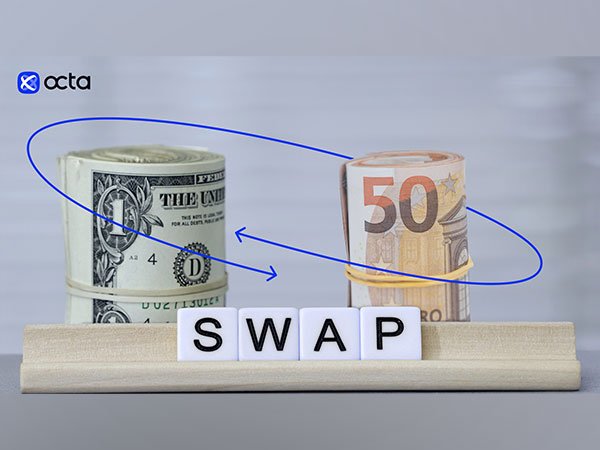
Forex swap: what it is, how it is calculated, and what are swap-free accounts in Octa

One of the most misunderstood terms in Forex trading is swap or Forex swap. To trade successfully, you should understand what Forex swap depends on and how it is calculated. This article describes what a Forex swap is, explains its mechanics, and describes swap-free trading accounts.

What is a Forex swap?

Swap is a commission charged for carrying open positions overnight to the next trading day in the Forex market. The exact moment when the swap is withdrawn from your trading account depends on your broker. Most brokers charge it most often between 11 p.m. and 12 a.m. server time.

The Forex market is over-the-counter and non-deliverable, meaning you are not the owner of the trading asset. In order not to cause the need for calculations, the system automatically closes an open position on the current trading day and opens it on the next one. Such closing is considered conditional, as the position is carried over, and the swap is charged.

Depending on the value of the swap and the position, the swap can be negative or positive. In other words, you will either have to pay a commission or be paid a commission for holding an open position overnight. This is because the margin system used in Forex trading allows you to use the additional capital the broker provides. You borrow funds to open a position from your broker.

There is an opinion among traders that the Forex swap is nothing but a broker’s commission. However, this is not true. Let’s find out how swaps work in the Forex market.

How do swaps work in the Forex market?

Every time you open a position, you make two transactions: buying one and selling another currency in a currency pair. So, you are essentially borrowing that money to sell one of the currencies and need to pay interest on the borrowed amount. However, in doing so, the currency you buy will earn you interest.

If the base interest rate on the currency you buy is higher than the currency you sell, you can earn interest on the difference in rates for carrying an open position to the next day. However, given the broker’s markup, regardless of the direction of the open position (buying or selling), you will have to pay a commission.

Thus, the value of a swap depends on the market and the instrument you are trading. For example, the swap on the same EURUSD and USDJPY positions will differ.

The value of swap varies depending on:

– online broker

– type of the position–Buy or Sell

– type of the asset

– number of days the position remains open

– nominal value of the position (number of lots).

Why is there a triple swap?

Sometimes, a swap is charged for holding an open position over the weekend, even if you did not have it on Saturday and Sunday. Such a fee is called a triple swap. Since the markets are closed on weekends, the triple swap was invented to compensate for this and is charged either on Fridays or Wednesdays, depending on the specific market.

This is because orders are settled on the Forex market on the second working day from the trade date (T+2). Since the value date falls on a weekend, the transfer is made for three days at once (on Monday). Therefore, from Wednesday to Thursday (at 12 a.m.), the swap is charged for the past weekend and Wednesday.

In other words, if you hold your position overnight when the triple swap is applied, your order will be charged three times the standard swap.

Are there swap-free accounts?

To make trading more convenient and accessible, many brokers have introduced the concept of swap-free accounts.

Swap-free accounts relieve the trader from the need to constantly monitor the size of accounting rates on currencies in a currency pair, make trading more straightforward, and allow taking into account in advance the commission for the transfer of positions when calculating the financial result of planned transactions. It is also relevant for those clients who cannot use swaps due to religious beliefs. This determines the second name of this type of account–Islamic accounts.

Charged daily, the swap fee accumulates over time, making trading less favourable. To enhance the investment opportunities of its customers, Octa has decided to remove swap fees for all types of trading accounts. These fees will no longer prevent traders from using medium- and long-term strategies in the financial market. Now, they can keep that position open for as long as they see fit and with no swap cost.

Continue reading
Finance

Savensa: The Pan-India Company That Has Made The Process of Getting a Personal Loan Simple

Today, one comes across a large number of companies in India offering personal loans to individuals. While some of these are Indian organizations, many of them are foreign companies that have also happened to set up base in India. While every company attracts customers through different services and offers, none of them had really managed to make the process of applying and getting a personal loan easier or convenient for people. That’s where Savensa entered the scene and changed the game.

Founded by the visionary entrepreneur Anil Kumar M, Savensa was launched as a finance company that would not only offer personal loans to customers but would also guide them during the process and ensure they do not face any hurdles while applying for or securing a personal loan. Building a direct connection with the customers by offering such services has made Savensa a unique and high-value brand in the personal loan offering space.

Elaborating on the same, founder and managing director Anil Kumar M says, “Many a times, people in our country need a personal loan but do not apply for one because of all the hassles involved in the process. Our company was built on the idea and objective of making personal loans accessible for everybody. On behalf of our customers, we take complete charge and responsibility of the loan application process and ensure that it is processed quickly and the amount is delivered to them in a smooth and transparent manner.”

As a company, Savensa has always worked towards getting an understanding of the issues faced by customers and resolving them in the best possible manner. Another factor that has helped the company grow and strike a chord with people across India is the fact that it operates as an organization that offers end-to-end digital services. This not only eliminates the possibility of errors and other issues, it also assures the customers of using a safe and reliable platform. Any salaried individual working in government, private limited or public limited employees can apply for a loan through Savensa if they get a minimum salary of Rs. 25,000 every month.

“Finance and technology are closely interlinked with each other. We not only have embraced technology but also ensure that we adapt to the constantly changing technological landscape. From using high-end software to implementing the most updated technological methods, we ensure that our digital infrastructure is strong and remains effective at all times. While we use today’s technology, we also make sure that none of our customers face any kind of difficulty while using or understanding it”, says Anil Kumar M.

Savensa has the kind of infrastructure and technology that makes it possible for its customers to go through different options while looking for a personal loan. They can check the services and offers provided by different financial institutions and then, make a well-informed decision after analysing everything thoroughly. The best part is that Savensa ensures that people do not go through any complications or confusion during this process and arrive at a decision quickly after weighing all the pros and cons.

For more information, visit www.savensa.co.in

Continue reading
Finance

SMC Group strengthens product and engineering verticals; appoints Abhishek Chawla as Group Chief Product and Technology Officer

SMC Group, India’s leading financial services company, has announced the appointment of Abhishek Chawla as Group Chief Product and Technology Officer. Over the last one year, SMC has been scaling its technology and product verticals as it continues to invest in the powerful synergy of technology, innovation, and financial services. Abhishek’s appointment is part of this strategy to further enhance SMC’s world-class financial products, accelerate creative development, and create large-scale impact. Abhishek will report to SMC Group’s CMD.

In his new role, Abhishek will lead SMC Group’s product and engineering verticals across its portfolio of products. He will also empower teams to bring sustained value to customers, partners, business associates and enhance user experience through technological innovations. Additionally, he will plan, manage, and oversee various activities within the department to ensure that efficient operations and cost-effective systems are developed and implemented to meet SMC’s immediate and future demands.

Commenting on the appointment, Subhash C Aggarwal, Chairman and Managing Director, SMC Group said, “The pursuit of innovation and great execution is at the core of SMC. We are thrilled to have Abhishek join us in strengthening this foundation and transforming financial products for our customers, partners and business associates. His strong expertise in tech innovation will further strengthen SMC’s commitment to creating value in customers’ lives and providing them with high-quality suites of financial products.”

With over 17 years of extensive experience, Abhishek holds expertise in conceptualization, design, development, implementation, management and production support of large scale and high availability applications. He has built and driven COEs along with owning and building technologies around Wallets, User Platforms, Lending, Payments etc.

Prior to joining SMC Group. Abhishek was a Vice President of Engineering with Byju’s. He has also worked in leadership roles at Paytm and Expedia earlier.

About SMC Group :

Established in 1994, SMC Global Securities Ltd is one of India’s leading financial solutions providers. Over the years, the company has grown into a diversified financial services company offering brokerage services, investment banking, wealth management, distribution of financial products, financing, insurance broking, clearing & depository services, fixed income securities, financial advisory services to corporates, institutions, high net worth individuals and other retail clients. It’s highly qualified workforce of about 4000 employees is serving to over 2.0 mn client base through a strong network of approx. 2,530 Sub Brokers and Authorized Persons. The company has footprints spread over 450+ cities across India.

To know more visit www.smctradeonline.com


Continue reading