Category

Education

Education

Eduinx Announces The Launch of a Comprehensive Course on Master Data Science with Generative AI

In a very short span of time, Eduinx.com has emerged as one of the leading online education platforms in India. Apart from individuals based in India, its courses and programs have proved to be of great value to people living in other countries as well. Through its well-structured programs, Eduinx has made a conscious effort towards making learning more accessible. Now, with its newly introduced course on Master Data Science with Generative AI, the platform aims to empower those who wish to carve out a career as data scientists.

Since the last few years, the demand for data scientists has been on a constant rise. The demand, in fact, is higher than the supply. With the help of data, one can arrive at important decisions. It can also work as a powerful tool to weave a narrative. Companies leverage data to put together business strategies which can help them get an edge over their competitors. With the help of trends and data insights, businesses make data-driven decisions.

Professionals, who have a solid understanding of data science, are getting the opportunity to work with some of the biggest organizations across the world and being paid handsomely for their services as well. The comprehensive program, designed by Eduinx, equips individuals with the skills and knowledge necessary to thrive in the ever-growing field of data science.

Talking about the Master Data Science with Gen AI course offered by Edunix.com, Eduinx Founding Team says, “Eduinx’s Master Data Science with Generative AI has been designed keeping in mind the demands and requirements of today’s professional world. In today’s data-driven world, the ability to extract meaningful insights from information is crucial for success across industries. Our Master Data Science with Gen AI course is designed to empower learners of all backgrounds to develop their data science expertise and unlock exciting career opportunities.”

The Master Data Science with Gen AI course by Eduinx covers a wide range of topics including data fundamentals, programming languages, statistics and machine learning, data visualization, and real-world applications. The course is designed to be flexible and accessible, catering to learners with varying levels of experience. Whether you are a complete beginner or somebody who has some understanding of it and is looking to refine your existing skills, Eduinx.com’s Master Data Science with Gen AI course provides a well-structured learning journey.

“There are several benefits of enrolling yourself in the Master Data Science with Gen AI course offered by Eduinx. We have an in-depth curriculum. The course is taught by industry experts and delves into the core concepts of data science, ensuring a thorough understanding. You get to engage with interactive exercises, quizzes, and projects to solidify your learning and apply your knowledge. You also get valuable insights into career paths in data science and how to position yourself for success. Without dealing with any kind of pressure, you can learn at your own pace with self-paced modules and convenient access from any device”, says Eduinx Founding Team.

Eduinx.com is committed to providing high-quality, affordable education that empowers individuals to achieve their goals. The online education platform’s Data Science course is a valuable addition to the platform’s extensive course library, catering to the growing demand for data science skills in today’s job market. After doing this particular course, an individual would be industry-ready and can chose from a variety of jobs pertaining to data science. Somebody who has a Master’s Degree in Data Science and has in-depth knowledge of Gen AI can expect to get jobs that would fetch them a salary ranging from 8 LPA to 45 LPA.

To ensure nobody, who has a keen interest in data science, misses out on taking up this course, Eduinx is offering a scholarship of Rs. 20,000 to deserving candidates this month. To learn more about the Data Science course and embark on your journey to becoming a data science expert, visit Eduinx.com today.

Facebook: https://www.facebook.com/profile.php?id=61554376480864&mibextid=ZbWKwL

Insta: https://www.instagram.com/eduinx.s?igsh=aWFlYmExYTdxdDA5

Linked in: https://www.linkedin.com/company/eduinx-com/

Program link: https://www.eduinx.com/Data-Science.html

Contact number: +91 74114 64640 / +91 7411313148

Continue reading
UPSC CSAT
Education

Decoding CSAT: Analysis of The Difficulty Level, Aiding Performance Assessment, and Strategy Assistance For UPSC Mains

The UPSC Prelims 2024 featured a pivotal examination component—the Civil Services Aptitude Test (CSAT). This review deeply explores the CSAT, evaluating its sections on Mathematics, Reasoning, and Reading Comprehension, analysing its overall difficulty, and offering strategic advice for those advancing to the Mains.

The observation about UPSC 2024 CSAT Paper

The CSAT can really throw you off if you’re unprepared for its twists and turns. Last year’s paper was a wake-up call for many aspirant who attempted the UPSC Prelims 2023. This year’s CSAT paper has returned to its roots with a few surprises. Seemingly, the difficulty level for this year’s paper is moderate compared to last year.  In this year’s UPSC CSAT paper, the distribution of questions was notably varied across the sections. There were 35-36 questions in Mathematics, 17-18 in Reasoning, and 27 in Reading Comprehension. This structure is consistent with previous years, especially in the Reasoning and Reading Comprehension components.

Detailed Analysis of Difficulty Levels

Mathematics

This year’s mathematics section of the CSAT paper prominently focused on testing candidates through algebraic expressions and number theory, with specific emphasis on divisibility and prime numbers. Additionally, it featured questions like Time & Work , Profit & Loss etc.

In CSAT 2024 paper, a  significant observation was the absence of questions from the topic of Permutation and Combination, a topic often regarded as challenging and complex. This omission relieved many aspirants, contrasting with the previous year’s more demanding content.

The exam included many questions typically covered in CSAT preparatory courses, focusing on concept-based understanding rather than rote memorisation. Of the 35 questions dedicated to Mathematics, many were aimed explicitly at testing proficiency in the Number system. This distribution suggests that the difficulty level of the Mathematics section ranged from moderate to challenging, aligning it with the rigorous standards expected in competitive examinations like that of the UPSC CSAT.

Reasoning

The Reasoning section, perceived as more straightforward than in previous years, featured 16-17 questions ranging from logical puzzles to data sufficiency tasks. The section emphasised deductive Reasoning, which requires candidates to draw logical conclusions from given statements, a skill critical for policy analysis and decision-making roles.

Furthermore, the examination tested Pattern Recognition and Sequence Solving skills, which are essential for data analysis and forecasting and are increasingly crucial in administrative roles. This approach assessed the candidates’ immediate analytical abilities and their potential to apply these skills in practical governance contexts.

Reading Comprehension

This year UPSC CSAT reading comprehension question encompasses a wide range of topics, including environmental issues, economic policies, and the impacts of social media on politics, requiring candidates to be well-versed and capable of understanding varied subjects.

The test includes inference-based questions on topics such as the environmental effects of food waste, assumption-based queries analysing the political impacts of social media, and central idea questions that delve into an author’s views on science. Additionally, application questions challenge candidates to broadly apply concepts like urban planning. These diverse question types critically test candidates’ ability to apply their knowledge, essential for success in UPSC CSAT Prelims.

In this year’s UPSC Prelims CSAT, the reading comprehension section posed a considerable challenge for aspirants. While some questions were straightforward and easily tackled, others proved more demanding, complicating the task of deriving the correct answers. The intricacy of the passages, especially with tricky traps strategically placed at paragraph ends, escalated the overall difficulty.  Comprising 27 questions, this section ranged from moderate to difficult, demanding a considerable deliberation on options from candidates. This complexity made efficient time management a crucial factor in navigating the section successfully.

How to Assess Your CSAT Performance

Assessing your performance in the CSAT can provide critical insights into your preparation levels and identify areas for improvement. Here’s a step-by-step guide to effectively evaluate your results:

  1. Match Your Answers with the Answer Key: Obtain the CSAT answer key from sources you trust post the exam.
  2. Count Your Correct and Incorrect Answers: Tally your correct and incorrect responses.
  3. Calculate Your Marks Based on The Pre Decided Rules: Each correct answer scores 2.5 marks and each incorrect answer incurs a penalty of 0.83 marks.
  4. Calculate Net Score: Subtract the penalty from your total correct answer marks.

An example of the aforementioned calculation method:

  • Attempted Questions: 80
  • Correct Answers: 60
  • Incorrect Answers: 20
  • Marks for Correct Answers: 150 (60 * 2.5)
  • Penalty for Incorrect Answers: 16.6 (20 * 0.83)
  • Net Score: 133.4 (150 – 16.6)

Preparing for UPSC Mains

With the prelims behind, successful candidates must now pivot towards the Mains examination, which demands an in-depth understanding of various subjects. Here’s how candidates can prepare effectively:

  1. Comprehensive Revision: This involves thoroughly reviewing all notes and preparatory materials, focusing on deep understanding of concepts rather than surface-level memorisation.
  1. Practice Rigorous Answer Writing: Given the descriptive nature of the Mains, practising answer writing is crucial. You should exhibit clarity, coherence, and conciseness, reflecting a well-rounded understanding of issues.
  2. Enhance Current Affairs Knowledge: The main examination significantly emphasises current affairs. Candidates should broaden their understanding by reading diverse sources and analysing current events from multiple perspectives.
  1. Focus on Optional Subjects: Deep dive into the chosen optional subject, as it can significantly influence the final score. Thorough preparation and regular testing in this subject are advisable.
  1. Simulate Exam Conditions: Regular mock tests under timed conditions can help adapt to the pressure of the actual exam and fine-tune time management and writing speed.
  2. Physical and Mental Well-being: It is crucial to maintain physical health through regular exercise and a balanced diet and mental health through adequate rest and stress management techniques.

The CSAT 2024 examined a diverse range of skills, encompassing numerical ability, critical reading, and logical thinking. As candidates gear up for the demanding UPSC Mains, adopting a focused, structured, and intensive study strategy will be crucial for success. Wishing you all the very best in your preparations!

Visit us at:

https://visionias.in/

Or Call us at: 8468022022, 9019066066

Continue reading
Education

Insights from UPSC GS Prelims Paper I 2024: A Comprehensive Analysis

The UPSC CSE Prelims 2024 was held on 16th June 2024 which has provided several insights into the evolving nature of the examination and the key areas of focus for aspirants. This analysis aims to delve deeper into the trends observed in this year’s paper, providing valuable takeaways and strategic suggestions for future candidates.

Overview of 2024 UPSC GS Prelims

The 2024 GS Prelims paper was characterized by a balanced and comprehensive approach, emphasizing foundational knowledge across a wide range of subjects. Compared to recent years, the overall difficulty level was relatively lower, making the paper more accessible to well-prepared candidates. This shift highlights the importance of a holistic preparation strategy, covering both conventional and dynamic aspects of the syllabus.

One of the most notable features of this year’s paper was the significant weightage given to conventional and static subjects. The emphasis was on testing aspirants’ understanding of core concepts and fundamental facts, which made the paper more manageable for those with a strong grasp of the basics. This trend underscores the need for aspirants to focus on building a solid foundation in each subject area.

Subject-Wise Analysis

  1. Geography: Geography made a strong comeback in this year’s paper, with nearly 20 questions dedicated to the subject. This included a substantial focus on environment and ecology, indicating the growing importance of these areas in the UPSC Prelims. The questions were designed to test both factual knowledge and conceptual understanding, reinforcing the need for thorough preparation in physical, human, and environmental geography.
  2. Polity & Governance: The Polity & Governance section was relatively easier, with questions based on conventional topics. The paper tested candidates’ knowledge of fundamental principles, constitutional provisions, and important governance mechanisms. This trend suggests that aspirants should continue to prioritize understanding the Constitution, key amendments, and landmark judgments.
  3. History: In the History section, the weightage of modern history showed a decline. However, the questions asked were conventional and doable, focusing on key events, personalities, and movements. Art & Culture was more influenced by current affairs, with questions linking historical events to contemporary issues. Ancient and medieval history saw fewer questions compared to last year, but the ones asked required a good grasp of significant events and cultural developments.
  4. Science & Technology: Science & Technology questions leaned towards cutting-edge technologies, with topics that were less complex but required an understanding of recent advancements. This indicates that aspirants should stay updated with the latest developments in science and technology, particularly those with practical applications and societal impact.
  5. Defence and Security: Defence and security-related questions made a notable appearance, highlighting the increasing importance of these areas. The questions were designed to test knowledge of recent developments, strategic policies, and key initiatives in national security.
  6. Economics: The Economics section included both conceptual and news-oriented questions. Aspirants were tested on fundamental economic principles as well as recent economic trends and policies. This dual focus underscores the need for a solid understanding of economic theory and current economic affairs.
  7. Current Affairs: Current Affairs continued to be a significant component, inspiring many static questions. The paper demonstrated the integration of current events with static topics, emphasizing the importance of regular newspaper reading and staying updated with ongoing national and international developments.

Key Takeaways and Strategic Suggestions

  1. Focus on Foundational Knowledge: The key takeaway from this year’s paper is the significance of focusing on foundational knowledge. Aspirants should prioritize building a strong understanding of the basics across all subjects. This includes revising standard textbooks, practicing previous years’ question papers, and strengthening core concepts.
  2. Comprehensive Preparation: The strategy to enhance attemptability in the UPSC Prelims should prioritize equal focus on every static subject. As observed this year with Geography’s resurgence, any subject could see a comeback in subsequent exams. Therefore, students cannot afford to neglect any subject in their comprehensive preparation. Regular revision and a balanced approach to all subjects are crucial.
  3. Practice and Elimination Skills: This year’s paper reaffirms the idea that “practice is the key.” Aspirants must diligently practice test papers for the prelims to enhance their readiness and performance. The return of elimination skills in the paper is a positive development. Students should hone their ability to eliminate incorrect options, as this technique can significantly increase the chances of selecting the correct answer.
  4. Importance of Current Affairs: Current Affairs remains a core part of the preparation. Despite the paper being theoretical and conceptual, many questions were centered around recent news issues. This highlights the need for aspirants to integrate current affairs with static knowledge. Regular reading of newspapers, and monthly current affairs magazines, and following reliable online sources are essential practices.
  5. Subject-Specific Strategies:
  • Geography: Given its prominence this year, aspirants should focus on comprehensive coverage of physical, human, and environmental geography. Understanding geographical phenomena, current environmental issues, and recent policies is crucial.
  • Polity & Governance: Continue to emphasize understanding the Constitution, governance mechanisms, and key amendments. Regular revision of standard polity textbooks is recommended.
  • History: Maintain a balanced approach to all periods of history. Link historical events with current affairs to better understand their relevance and implications.
  • Science & Technology: Stay updated with recent advancements and practical applications of emerging technologies. Focus on understanding basic scientific principles and their real-world implications.
  • Economics: Strengthen conceptual knowledge and stay informed about recent economic developments, policies, and trends. Regularly read economic surveys, budget documents, and reliable financial news sources.
  1. Stress Management and Time Management: Managing stress and time effectively is crucial for optimal performance. Aspirants should practice mindfulness techniques, maintain a healthy routine, and allocate sufficient time for each subject. Regular breaks, adequate sleep, and a balanced diet can help maintain physical and mental well-being.

The 2024 UPSC GS Prelims paper has highlighted the importance of a comprehensive and balanced preparation strategy. By focusing on foundational knowledge, practicing diligently, and staying updated with current affairs, aspirants can enhance their readiness for the exam. The insights gained from this year’s paper should guide future candidates in refining their preparation strategies, ensuring they are well-equipped to tackle the diverse and dynamic nature of the UPSC Prelims.

Visit us at:

https://visionias.in/

Or Call us at: 8468022022, 9019066066

Continue reading
Education

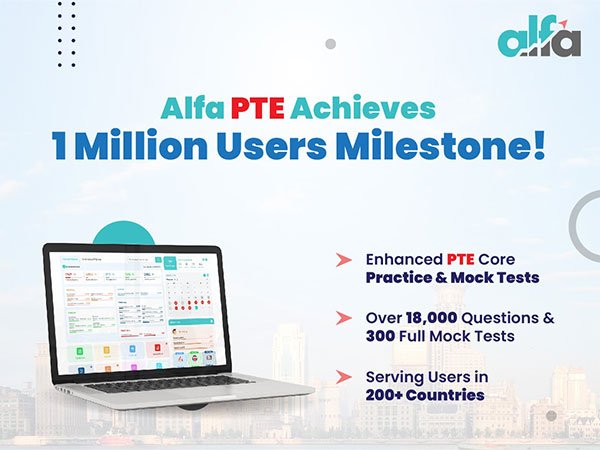
Alfa PTE Celebrates 1 Million Users, Announces Enhanced PTE Core Practice & Mock Tests

Alfa PTE, a pioneering platform dedicated to empowering test-takers for the Pearson Test of English (PTE), today announced a significant milestone: surpassing one million registered users on its platform. “Reaching the one-million-user mark is a testament to the effectiveness of our platform and our dedication to supporting PTE aspirants,” said Fatima, Head of Training, Alfa PTE. This remarkable achievement underscores Alfa PTE’s commitment to providing exceptional resources and tools that help individuals achieve their PTE goals.

Alfa PTE goes beyond celebrating this user milestone by also announcing the expansion of its services to include PTE Core practice and mock test solutions. PTE Core is a brand-new English language proficiency test designed by Pearson, to assess general English skills for everyday situations. It has received approval from Immigration, Refugees, and Citizenship Canada (IRCC) for all Canadian government economic visa categories.

Alfa PTE is a comprehensive online platform designed to equip individuals with the necessary skills and knowledge to excel in the PTE exam be it Academic or Core. It is designed to help users master the PTE test and achieve their desired scores. With a user-friendly interface, advanced learning materials, and personalized feedback, Alfa PTE empowers test-takers to achieve their desired scores with confidence.

By adding PTE Core to its portfolio, Alfa PTE has broadened its scope of delivering PTE preparation solutions to learners across the globe. By incorporating PTE Core practice and mock tests, Alfa PTE has significantly expanded its comprehensive suite of PTE preparation solutions, empowering aspiring test-takers worldwide to achieve their desired scores with confidence.

Some of the features that make Alfa PTE stand out from others are:

* Interactive practice modules: Mimicking the actual PTE test format, these modules allow users to hone their skills across all four PTE test areas – speaking, reading, writing, and listening.

* AI-Powered Practice: Alfa PTE offers a sophisticated practice platform with AI scoring, allowing users to practice all PTE question types, including PTE Core questions.

* Realistic mock tests: Simulating the actual PTE test environment, mock tests provide valuable insights into test-taking strategies and time management skills.

* Real Exam Questions: Access a vast collection of real exam PTE questions that cover a wide range of topics and difficulty levels ensuring familiarity with various test scenarios.

* Personalized feedback: Users receive comprehensive feedback on their performance, identifying strengths and areas for improvement. This tailored approach enables them to focus on specific areas and maximize their score potential.

* Mobile App: Our free-to-download mobile app provides on-the-go practice with instant AI scoring.

Alfa also provides a personalized PTE Software for Institutes wherein the business gains access to the PTE practice software, fully customizable with their branding and a unique URL. This portal features an extensive range of practice content for both PTE Academic and PTE Core, ensuring that their students are thoroughly prepared for success.

Alfa PTE is committed to helping users achieve their desired PTE scores and fulfill their academic and professional goals. Alfa PTE is constantly updating and improving its platform, based on user feedback and the latest PTE standards.

Whether you’re preparing for PTE Academic or exploring PTE Core, Alfa PTE remains your trusted partner in achieving your desired scores. With over a million users globally, we invite you to explore our practice material, mock tests, and templates.

To learn more about Alfa PTE and its features, visit Alfa PTE today and elevate your PTE preparation!

To know more about Alfa PTE, – https://linktr.ee/alfa_pte

Continue reading
Education

Answer key for UPSC CSE Prelims 2024 by ForumIAS

Today, June 16th, 2024, the much-anticipated UPSC Civil Services Examination (CSE) Prelims 2024 took place in two sessions. The first session, featuring the General Studies Paper 1 (GS Paper 1), commenced at 9:30 AM and concluded at 11:30 AM. With the examination now completed, candidates are keenly seeking the answer key to verify their answers and assess their performance.

Understanding the importance of timely and accurate information, ForumIAS, a prominent UPSC civil services coaching institution, has promptly released the answer key for GS Paper 1 before 5 PM today. This enables aspirants to quickly access the answer key, evaluate their performance, and estimate their chances of progressing in the examination.

The release of an accurate answer key is crucial for UPSC aspirants as it allows them to gauge their performance and reduce anxiety and uncertainty while awaiting the official results. It also aids them in identifying areas that need improvement and strategizing their preparation for the Main Examination.

Mr. Divyesh, the head of the ForumIAS IT team, commented, “We recognize the critical need for timely and precise information for UPSC aspirants. Thus, like all previous years, this year as well, our team has ensured a prompt release of the answer key and provided detailed, comprehensible explanations. In this way, we aim to support candidates in their preparation journey and boost their confidence.”

ForumIAS has also made detailed explanations for each question available by 7 PM today. These explanations are designed to help candidates understand the reasoning behind the correct answers, thereby enhancing their preparation and learning experience.

UPSC Prelims 2024 Answer Key by ForumIAS is available at: https://forumias.com/blog/upsc-prelims-answer-key-2024/

About UPSC CSE Prelims 2024

The UPSC Civil Services Preliminary Examination is the first stage of the UPSC Civil Services Examination, which is a highly competitive exam conducted annually by the UPSC of India. The Prelims exam serves as a screening test for candidates who aspire to join the prestigious Indian Administrative Service (IAS), Indian Foreign Service (IFS), Indian Police Service (IPS), and other central services.

The Preliminary Examination comprises two compulsory papers, both of which are objective in nature (multiple-choice questions). The details of GS Paper 1 are as follows:

General Studies Paper 1 (GS Paper 1)

  • Duration: 2 hours
  • Total Questions: 100
  • Total Marks: 200
  • Question Type: Multiple Choice Questions (MCQs)
  • Negative Marking: 1/3rd mark deducted for each incorrect answer
  • Purpose: This paper tests the candidates’ knowledge and understanding of a wide range of subjects, including:
    • History of India and Indian National Movement
    • Indian and World Geography – Physical, Social, Economic Geography of India and the World
    • Indian Polity and Governance – Constitution, Political System, Panchayati Raj, Public Policy, Rights Issues, etc.
    • Economic and Social Development – Sustainable Development, Poverty, Inclusion, Demographics, Social Sector Initiatives, etc.
    • General Issues on Environmental Ecology, Biodiversity, and Climate Change – that do not require subject specialization
    • General Science
    • Current Events of National and International Importance

General Studies Paper 2 (CSAT)

  • Duration: 2 hours
  • Total Questions: 80
  • Total Marks: 200
  • Question Type: Multiple Choice Questions (MCQs)
  • Negative Marking: 1/3rd mark deducted for each incorrect answer
  • Purpose: This paper tests the candidates’ skills in areas such as:
    • Comprehension
    • Interpersonal Skills including Communication Skills
    • Logical Reasoning and Analytical Ability
    • Decision-Making and Problem-Solving
    • General Mental Ability
    • Basic Numeracy (numbers and their relations, orders of magnitude, etc.) – Class X level
    • Data Interpretation (charts, graphs, tables, data sufficiency, etc.) – Class X level

The CSAT paper (GS Paper 2) is of qualifying nature, meaning candidates need to secure at least 33% marks (66 out of 200) to qualify. The marks obtained in GS Paper 1 are considered for the cut-off.

Cut-off: The cut-off for the Preliminary Examination is determined based on the marks obtained in GS Paper 1 only. Candidates need to clear the cut-off to qualify for the Main Examination.

Total Marks: The total marks for the Preliminary Examination (considering both papers) are 400.

Continue reading
Education

MIT Vishwaprayag University Pioneers Paperless Exams, Leading the Way in Higher Education Digitization

Solapur, India – In a groundbreaking move towards digitization, MIT Vishwaprayag University (MITVPU) in Solapur has successfully implemented paperless exams. This initiative marks a significant milestone in the university’s commitment to innovation and sustainability, reflecting a broader trend towards digital transformation in higher education.

The university’s adoption of paperless exams is a strategic step into the digital age, eliminating the need for physical exam materials. By transitioning to a secure online platform, MITVPU has streamlined the examination process, benefiting both students and faculty. This move is poised to enhance the overall learning experience, showcasing the university’s dedication to staying ahead in the rapidly evolving educational landscape.

One of the primary advantages of this transition is the reduction of administrative tasks. With the elimination of paper, faculty and staff are no longer burdened with the logistical challenges of printing, distributing, collecting, and securely storing exam materials. This change allows university resources to be redirected towards more strategic initiatives, such as curriculum development and enhanced faculty support services.

Moreover, the digital platform automates grading for specific types of questions, allowing faculty to focus on providing in-depth feedback. Students now receive not only their overall scores but also detailed performance analytics on individual questions and learning objectives. This detailed feedback empowers students to identify areas for improvement and to target their efforts more effectively.

Inclusivity is another significant benefit of paperless exams. Digital platforms often include features that cater to students with disabilities, such as text-to speech conversion, zoom capabilities, and alternative question formats. These features ensure that all students have an equal opportunity to demonstrate their knowledge and skills.

The transition also addresses concerns about security and data integrity.

Paper-based exams are susceptible to loss, damage, or accidental exposure. In contrast, digital exams provide a more secure platform for administering and storing sensitive student data, with robust encryption and access controls that minimize the risk of unauthorized access or information breaches.

Beyond operational efficiency, MITVPU’s move to paperless exams contributes to environmental sustainability. The elimination of paper exams significantly reduces paper waste, thereby decreasing the environmental impact associated with paper production, such as deforestation, water pollution, and energy consumption. This initiative reflects the university’s commitment to environmental consciousness and promotes a culture of sustainability within the MITVPU community. Students, faculty, and staff are becoming accustomed to a digital workflow, encouraging the adoption of sustainable practices in other aspects of university life. This sets a positive example that resonates beyond the campus.

The implementation of paperless exams at MIT Vishwaprayag University stands as a testament to the institution’s unwavering commitment to continuous improvement and innovation. By embracing digitization, MITVPU is not only enhancing operational efficiency but also paving the way for a more sustainable and environmentally conscious educational environment. This forward-thinking approach benefits both present and future generations, positioning MITVPU as a leader in the field of educational innovation.

For further information, please contact:

MIT Vishwaprayag University (MITVPU)

Solapur-Pune highway, Kegaon, Solapur, Maharashtra, India – 413255

+91 8496849849  info@mitvpu.ac.in

https://www.mitvpu.ac.in/

Continue reading
Education

UPSC Prelims 2024 Answer Key by ForumIAS

Much awaited UPSC CSE Prelims 2024 is all set to take place on 16th June 2024 i.e. Sunday, in 2 sessions. Both sessions will be 2 hour long. In the first session, GS Paper 1 will be conducted. The exam is expected to start at 9:30 AM and end by 11:30 AM. As soon as the exam is over, candidates and other students will start to look for the answer key to match and verify their own answers.

The release of the answer key on time by different institutions is very important for UPSC aspirants. It provides them with an opportunity to gauge their performance and estimate their chances of clearing the Preliminary Examination. An accurate answer key also helps in reducing anxiety and uncertainty among candidates as they await the official results.

Therefore, ForumIAS, a leading UPSC civil services coaching institution, is set to release the answer key for the General Studies Paper 1 (GS Paper 1) of the UPSC Prelims on June 16th, 2024. The answer key will be made available before 5 PM, ensuring that aspirants can quickly access and evaluate their performance. Detailed explanations for each question will be provided by 7 PM, allowing candidates to understand the reasoning behind each answer.

The answer key will be available for all four sets of the GS Paper 1: Set A, Set B, Set C, and Set D. This comprehensive approach will ensure that all candidates can easily find the answers corresponding to their respective question paper sets.

Mr. Abrar Saifi, the head of ForumIAS blog team, stated, “We understand the importance of timely and accurate information for UPSC aspirants. Every year our team works tirelessly to ensure that the answer key is released promptly and that the explanations are comprehensive and easy to understand. Similarly, this year as well, we will deliver the answer key on time. We hope this will help candidates in their preparation journey and boost their confidence.”

When we talked to one of the candidates, on importance of prompt prelims answer key, who is going to take the prelims exam, he said, “Since UPSC releases the official answer key only after the conclusion of exam, it is very important for us. Although, answer keys are not 100% accurate, we at least get an idea that whether we should start preparing for the next stage or we have work more on our preparation for prelims only. However, candidates around the border line do not get much clarity. It is the students who are getting +- 20-30 marks from the expected cutoff, who can be certain of the result and start with their action plan”

The answer key will be accessible on the official ForumIAS website (https://forumias.com/blog/upsc-prelims-answer-key-2024/) under the ‘UPSC Alerts’ section. Candidates can download the answer key for their respective sets and compare their answers. The detailed explanations will also be available on the same page by 7 PM.

In addition to the online access, ForumIAS will also conduct a live session to discuss the answer key and address any queries from the aspirants. This interactive session will be held on the ForumIAS YouTube channel (Date and time for the same will be announced). Candidates are encouraged to join the session to gain further insights and clarifications.

The General Studies Paper 1 is a crucial component of the UPSC Civil Services Preliminary Examination. It tests candidates on a wide range of topics, including History, Geography, Polity, Economy, Environment, Science and Technology, and Current Affairs. The paper consists of 100 questions, each carrying 2 marks, making the total marks for the paper 200. The exam is conducted in a multiple-choice question (MCQ) format, and there is a negative marking of 1/3rd mark for each incorrect answer.

CSAT is the 2nd exam, which is conducted in the 2nd session around 2:30 PM. It tests the general comprehensive and analytical abilities of the candidate. The CSAT paper (GS Paper 2) is of qualifying nature, meaning candidates need to secure at least 33% marks (66 out of 200) to qualify. The marks obtained in GS Paper 1 are considered for the cut-off.

Continue reading
Education

UPSC Prelims 2024 Exam Day: Top Preparation Tips and Essential Checklist

With the UPSC Civil Services Prelims 2024 exam just days away, it’s crucial to utilize your remaining time effectively and ensure you’re well-prepared for the big day. Here are some important UPSC preparation tips, test-taking strategies, and an essential checklist to help you maximize your performance on June 16th from VisionIAS, the go-to IAS coaching in Delhi for UPSC aspirants.

Preparation Tips for the Final Days

1. Focused Revision

In the final days before the Civil Services exam (Prelims 2024), focus on revising the UPSC Prelims Syllabus. The goal is to solidify your understanding of what you have already studied.

Core Subjects:

  • Polity: Revise important articles, amendments, and landmark judgments. Use VisionIAS Quick Revision Module for efficient revision.
  • History: Focus on Modern History, especially the freedom struggle.
  • Geography: Review key concepts, maps, and diagrams, focusing on physical geography and climate patterns.
  • Economy: Revise fundamental concepts, budget highlights, and economic survey summaries. PT 365 is invaluable for current affairs.
  • Environment: Concentrate on protected areas, biodiversity, and recent environmental developments.
  • Science and Technology: Focus on recent developments, especially in space technology, biotechnology, and IT.
  • Ancient and Medieval History: Revise important dynasties, cultural, and scientific developments.
  • Art and Culture: Review classical dances, music, painting, architecture, and literature.

Current Affairs: Focus on the last 12-14 months of current affairs. Use concise monthly compilations and revise key events, government schemes, and international affairs. VisionIAS PT 365 is a great resource for this.

2. Mock Tests and Previous Year Papers

Attempt 1-2 full-length mock tests. Focus on tests that simulate actual exam conditions. Review your answers critically to understand your mistakes.

Go through the last 5 years of UPSC Prelims papers. Analyzing previous papers helps understand the pattern and frequently asked topics. The 7-Year UPSC PYQ Trend Analysis provides detailed analysis and smart notes.

3. Time Management and Strategy

Plan to allocate around 1 minute per question. Prioritize easy and medium-difficulty questions first and revisit difficult ones later. Develop a strategy for deciding which questions to attempt and which to skip, avoiding guesswork unless you can eliminate at least two options.

4. Maintain Health and Well-being

Ensure you get adequate sleep (7-8 hours). Maintain a balanced diet and stay hydrated. Practice relaxation techniques like deep breathing or meditation. Keep a positive mindset and avoid last-minute panic.

5. Exam Day Readiness

Keep your admit card and a valid ID proof ready. Print multiple copies of the admit card and ensure your ID proof is current and valid. Place these documents in a secure folder and keep them in your bag the night before the exam.

Carry at least 2-3 black ballpoint pens, an HB pencil, an eraser, a sharpener, and a transparent writing pad. Check all your stationery the day before to ensure everything is in working order. Plan your travel to the exam center well in advance. Aim to reach at least an hour before the reporting time.

Test-Taking Strategies for Maximized Performance

1. General Studies Paper I

Spend the first few minutes reading the entire question paper. Identify and mark questions you are confident about. Attempt easy questions first to secure sure-shot marks and boost confidence. Move on to medium-difficulty questions where you can eliminate options. Use educated guesses if needed, but be cautious with negative marking.

Keep track of time using a watch and aim to complete the paper with time to spare for review. This buffer time is crucial for revisiting marked questions and ensuring you haven’t missed anything. Mark your answers on the OMR sheet with care, double-checking question numbers and corresponding bubbles.

2. CSAT Paper II

Identify your strengths and prioritize sections accordingly. For reasoning and aptitude questions, solve them step-by-step and skip complex ones to return to later. Practice shortcuts and tricks to solve aptitude questions faster.

Allocate time based on the difficulty and length of sections. Attempt all sections to maximize your score. Don’t spend too much time on one type of question; balance your time to cover the entire paper. Attempt a few CSAT mock tests to get a feel of the paper, focusing on accuracy and speed.

3. Maintaining Focus and Calmness

Maintain a positive attitude throughout the exam. Remind yourself of your preparation and stay confident. Positive self-talk can help reduce anxiety. If overwhelmed, take deep breaths or close your eyes for a few seconds. Trust your instincts and avoid changing answers unless absolutely sure.

Essential Checklist for Exam Day

  • Admit Card: Print 2-3 copies and keep them in a secure folder.
  • ID Proof: Carry a valid ID proof (Aadhar card, passport, voter ID, etc.).
  • Pens: 2-3 black ballpoint pens (smooth and reliable).
  • Pencil, Eraser, Sharpener: For rough work and OMR sheet markings.
  • Transparent Writing Pad: A4 size for ease of writing.
  • Water Bottle: A transparent, unmarked water bottle to stay hydrated.
  • Snacks: Light snacks like energy bars or nuts for quick energy boosts.
  • Mask and Sanitizer: Follow COVID-19 protocols by carrying a mask and hand sanitizer.
  • Watch: An analog watch to keep track of time (if allowed).

The final days leading up to the UPSC Prelims Exam 2024 are crucial. By following these preparation tips, employing effective test-taking strategies, and ensuring you have all the essentials ready for exam day, you can approach the exam with confidence and calmness. Remember, consistent effort and a positive mindset are key to success. Best of luck on your journey to becoming a civil servant!

Visit us at:

https://visionias.in/

Or Call us at: 8468022022, 9019066066

Continue reading
Education

AIB Management and Business School: French Business School launches India admissions office

AIB Management and Business School, a business school located in Lyon, France has recently started their India admissions office. Their core programs for international students include BBA and MBA. The India office is aimed at supporting students that are looking to study in France. The degrees awarded by AIB Management and Business School are RNCP certified, meaning the students can stay back in France for 2 years after graduating. Students are also eligible for a 5 years Alumni Visa.

If we can summarize the recent visit to India by French Foreign Minister Catherine Colonna, it is to use educational exchanges to strengthen the strategic ties between France and India. “We want 20,000 Indian students in France by 2025”, she said while calling the plan “very ambitious”. Very recently when the French President Mr.Macron visited India as the chief guest of Indian Republic Day, he was very vocal in his country’s plan to achieve the 30,000 student target by 2030.

Improving France-India strategic relationship through education will be top priority for both Modi and Macron Administration’s foreign policy. Educational partnerships will play an increasingly important role in the people to people exchange between both the countries.

The French Government provides a lot of attractive incentives for Indian students looking to Choose France including the 2 years stay back option, Rental Subsidy for students, 5 year Alumni Visa, etc. The mandatory internship model, prevalent in most of France’s world class business schools, is very attractive for Indian Students, which gets the students ready to join a diverse workforce as soon as they graduate with a top class degree that is recognized worldwide, especially with the brand value it carries.

Migration of students from India to France is being enhanced through visa policies, including ease of receiving French student visas for Indians, simplifying the Campus France Process etc.

Top Reasons to Study in AIB Management and Business School, Lyon:

  • No IELTS
  • Mandatory Paid Internships – Ex., 12 months pgm(8 months class+4 month internship). Salary Euros 800-1200/month
  • 20 hrs Part-Time (Can earn 6 Lakhs INR/year through part time)
  • 30-40% refund on student accommodation rent by French Government(Called as CAF)
  • Cheap Government Health Insurance (150-400 Euros). Covers 70% of all medical expenses.
  • France has Europe’s highest concentration of Fortune 500 corporations. Especially after Brexit, all companies that wanted to do business in Europe, moved to France.
  • Popular French brands (luxury, beauty, banking, insurance, IT, Automobile, Aero,Food)
  • India-France developing good relationship, a lot of French companies have offices in India like Airbus, Capgemini, Renault, BNP Paribas, ALSTOM, ATOS, Loreal, Total Energy, Garnier, Louis Vuitton, Chanel, AXA insurance, Societe Generale, Rafael – DASSAULT, DECATHLON, Lacoste, Michelin Tyres, Citroen, Alcatel, NOVOTEL hotels, SANOFI, VALEO, Sodexo, Schneider Electric etc.,
  • 2 Years stay back after graduating
  • 5 year Alumni Visa
  • India-France Mutual Recognition of Academic Qualifications. It means if a student gets a degree in France, it is recognized by the Indian government even for government jobs in India

Johann Chupin, the president of AIB Management and Business School spoke regarding the occasion, he said “AIB Management and Business School is committed to working towards this mission to improve ties between India and France. AIB Management and Business School provides students in India with French government and EU recognized degrees which will help them in finding great career opportunities post graduation. Catering to popular demand by students in India, AIB Management and Business School has expanded its admissions office in India by appointing a local representative in the country, to include more virtual advising, new communication channels, social media outreach to attract potential students, and a nationwide advising hotline.”

Continue reading
Education

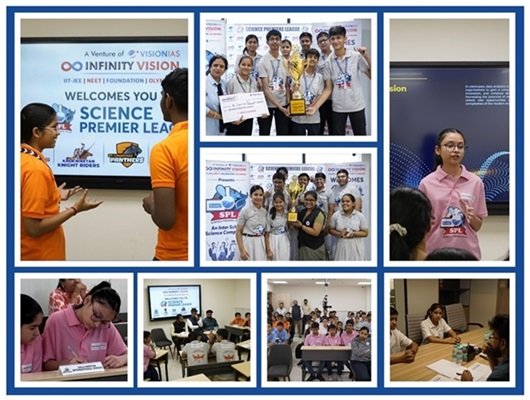
Infinity Vision Wraps Up Science Premier League (SPL) 2024 with Stellar Scientific Talent

Infinity Vision (a venture of Vision IAS), successfully concluded the Science Premier League (SPL) 2024, an Inter-School Competition designed to unite students from various schools in Delhi, challenging their scientific acumen and providing them with a healthy, knowledge-based experience.

The first phase of SPL commenced across over 10 schools in April 2024. Students from 8th to 10th standard participated enthusiastically, demonstrating their problem-solving prowess and scientific intelligence through objective questions and essays covering a wide range of topics, including Artificial Intelligence (AI), climate change and space exploration.

Continuing the momentum, SPL 2024 advanced to its second phase at Infinity Vision, Preet Vihar Centre in Delhi, on May 8th and 10th. Here, the top 8 students selected from each school in the initial phase exhibited their talent through presentations, case studies and group discussions.

The presentation round began with students working in groups to create and present PPTs on emerging technologies, promoting confidence and team building. Next, the case studies evaluated students’ ability to apply scientific theoretical concepts analytically to solve problems. Finally, group discussions centred on brainstorming current scientific challenges and opportunities while promoting the students’ listening skills and public speaking abilities.

On the first day of the second phase, St. Lawrence Convent School emerged victorious, with Laxmi Public School as the 1st Runner-up and Arunodaya Public School as the 2nd Runner-up. On day two, the standout moment was St. Lawrence Public School’s win, with Viaan International School as the 1st Runner-up and RPM Lovely Public Sr. Sec. School as the 2nd Runner-up.

The exceptional performance of the students not only underscores their aptitude for science but also reflects the high-quality education imparted by the participating schools. Competitions of this nature develop a sense of camaraderie among participants while refining their critical thinking and collaborative abilities, which are vital for navigating the complexity of today’s world.

Committed to maintaining the standards of excellence, Infinity Vision remains dedicated to the holistic development of students.

Continue reading