Category

Education

Education

Backstage Pass Institute Leads the Way in Game Development at India Game Developer Conference 2023

Hyderabad (Telangana) [India]: The 15th India Game Developer Conference (IGDC), held in Hyderabad, not only celebrated game development but also highlighted the pivotal role of educational institutions in shaping future talent. Among them, the Backstage Pass Institute of Gaming and Technology (BSP) stood out, proving once again why it’s considered a leading light in India’s gaming education sector.

Established in 2010 by Surya Prakash, BSP has consistently pushed the boundaries of gaming education. Starting with less than ten students, the institute has now evolved into a vibrant hub, hosting over 900 students and alumni. Its unique approach, blending theoretical knowledge with hands-on practical experience, has made it a preferred destination for budding game developers. “We are proud of the educational milestones we have achieved, but the real reward is seeing our students excel at prestigious platforms like the IGDC,” said Surya Prakash, reflecting on BSP’s impact.

BSP offers a comprehensive array of courses tailored to the evolving needs of the gaming industry. These include the M.SC in Game Technology, B.SC (HONS) in Computer Science and Game Development, B.A (HONS) in Game Art & Design, and B.A (Hons) in Augmented Reality and Virtual Reality. Each program is designed to equip students with the skills and knowledge necessary to thrive in the competitive world of game development.

https://youtu.be/zTk2u4s3oeQ?feature=shared

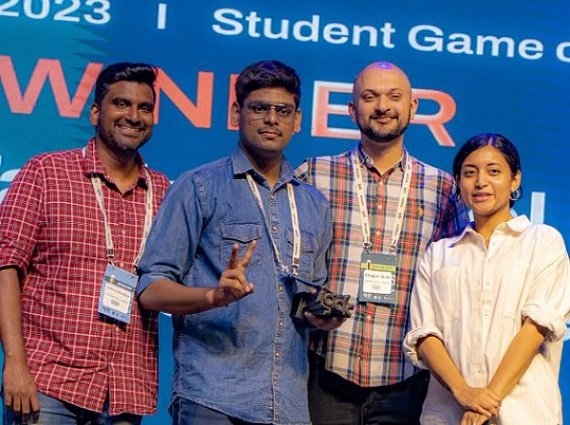
At the IGDC 2023, the spotlight was on Backstage Pass’s own Abhishek Singh, who earned the ‘Student Game of the Year’ award for his innovative game, ‘Laser Tanks’. This award marks a significant achievement for Indian game developers on the international stage. Abhishek’s journey began early in his school years with an interest in programming and web design. His first game, “Cuber,” launched on itch.io, received a warm reception, encouraging him to pursue a career in game development.

Enrolling in BSP to further his education, Abhishek refined his skills and conceptualized “Laser Tanks,” an action RPG that captivated players with its intense combat scenarios. Released on the Google Play Store on April 14, 2023, the game has been well-received, earning a 4.2 rating and is expected to expand to Steam soon.

In his victory speech, Abhishek expressed deep gratitude to BSP, stating, “I am incredibly grateful for the guidance and support from my professors at BSP. This award is not just a personal achievement, but a milestone for the entire team that worked on Laser Tanks.”

The success of students like Abhishek Singh at IGDC 2023 is a testament to the quality of education and training provided by institutions like Backstage Pass Institute of Gaming and Technology. For more information about BSP and its programs, visit www.backstagepass.co.in/ or contact +91 8008002794/95.

Continue reading
Education

Education Exclusive: Revolutionising Education with a Comprehensive Online Portal

India’s leading online education platform now provides the latest news, in-depth analyses, skill development courses, and a resource hub for students, educators, and institutions, fostering a comprehensive learning ecosystem.

A Hub of Educational News and Insights

EducationExclusive.com stands out as a top source for educational news, offering seasoned journalism and research to deliver the most recent information on new initiatives, laws, and programs influencing the future of education. The platform provides a global perspective on education, ensuring users are well-informed about international trends and policies.

Expert Analysis and Opinions

The portal goes beyond news, offering professional analysis and opinions on various educational topics. These articles provide insights into the challenges facing the education industry and propose innovative solutions, enhancing understanding among educators and policymakers.

Enhancing Visibility for Educational Institutions

EducationExclusive.com invites colleges and universities to register on the portal, offering them increased visibility among a diverse audience. This feature allows institutions to showcase their unique programs and achievements, connecting them with potential students and educators worldwide.

Skill Development and Educator Resources

The platform prioritizes practical learning through its online skill development courses, incorporating hands-on activities and real-world examples. Additionally, it serves as a resource hub for educators, offering articles on effective teaching practices and classroom management.

Scholarship Information and Admission Assistance

A key feature of EducationExclusive.com is its comprehensive listing of scholarships and detailed admission information, aiding students in their educational journey. The portal also provides timely reminders about crucial deadlines and dates for college admissions.

Fostering a Community of Education Advocates

EducationExclusive.com is more than a news site; it’s a platform for engagement and idea sharing among students, teachers, lawmakers, and advocates. It encourages contributions from its users, including news items, articles, and insights, fostering a collaborative educational environment.

Join the Educational Revolution

We invite educational institutions to join us in our mission to revolutionize education in India and beyond. Register your college or university on EducationExclusive.com and become part of a growing network committed to educational excellence and accessibility. For more information and to become a part of this vibrant educational community, visit us at https://educationexclusive.com/

Continue reading
Education

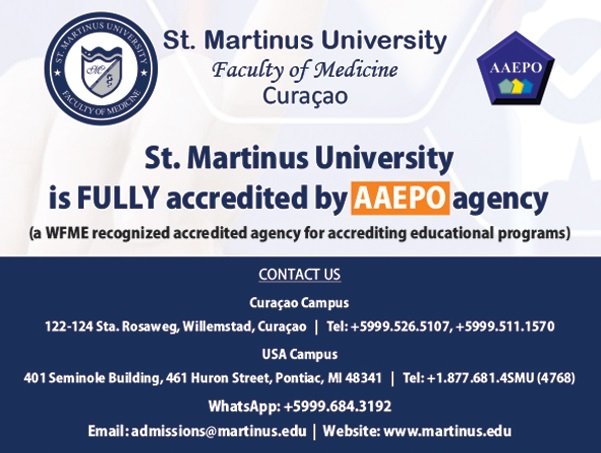
St. Martinus University, Willemstad, Curaçao Secures Coveted 5-Year Accreditation from AAEPO

Willemstad, Curaçao November 20th – The St. Martinus University Faculty of Medicine is pleased to announce its successful attainment of full institutional accreditation from the Agency for Accreditation of Educational Programs and Organizations (AAEPO) in Kyrgyzstan, an agency accredited by WFME. This significant accreditation, valid until 2028, underscores the institution’s unwavering commitment to upholding elevated standards of education and academic excellence.

The meticulous AAEPO accreditation process validates that St. Martinus University Faculty of Medicine Willemstad not only meets but exceeds the rigorous criteria set by the accrediting agency. This recognition underscores the university’s dedication to delivering quality medical education and its continuous efforts to enhance the learning experience for its students.

Dr. Murali Ginjupalli, Chancellor of St. Martinus University, expressed joy at the accreditation, stating, “We are delighted to receive this recognition from AAEPO, affirming our steadfast commitment to providing top-notch medical education. This accreditation strengthens our position as a reliable institution that adheres to and surpasses international standards in medical education.”

The 5-year institutional accreditation provides assurance to current and prospective students, faculty, and stakeholders that St. Martinus University Faculty of Medicine Willemstad is devoted to maintaining high educational standards, promoting innovation, and adhering to best practices in medical education.

To commemorate this achievement, the university will host various events and initiatives showcasing its ongoing dedication to academic excellence. The accreditation also opens avenues for collaboration and partnerships with other esteemed institutions worldwide.

For more information, please contact:

Hemawathi Sharada Mohan

Manager

St. Martinus University Faculty of Medicine Willemstad, Curaçao

About St. Martinus University Faculty of Medicine Willemstad, Curaçao:

St. Martinus University Faculty of Medicine Willemstad, Curaçao is a leading institution committed to delivering exceptional medical education. With a focus on nurturing the development of skilled and compassionate healthcare professionals, the university has positioned itself as a center for academic excellence in the field of medicine.

Continue reading
Education

UPSC CSE Preparation Strategy, Planning and Approach for Working Professionals

In the quest for a sense of purpose, diverse career opportunities, leadership, respect, prestige, and working for a cause larger than oneself, many working professionals aspire to join civil services. While other jobs might seem more suitable, remunerative or convenient, the UPSC civil services allow one to pursue a career with a sense of purpose and turn this endeavor into reality.

The UPSC CSE Consists of 3 stages. Firstly, the Preliminary stage of the Examination consists of two objective-type papers with multiple choice questions i.e., General Studies Paper I and General Studies Paper II (CSAT). Secondly, the Mains examination includes a written stage and Interview for the final selection of candidates for the various Services and posts. The written stage comprises nine papers including Essay, Ethics GS Papers I, II & III, Optional Papers I & II and Language papers. Lastly, the Interview stage of the examination assesses the personality suitability of the candidate for a career in public service.

Attaining success in these stages of examination not only grants direct entry into the Indian civil services but also empowers individuals to actively contribute to the implementation of government policies, fostering socio-economic transformations in Indian society. Simultaneously, it opens the door to a profession that promises a high quality of life and enjoys elevated social prestige. This dream to serve the country shall not be confined to thoughts and shall manifest into tangible reality.

Holistic Preparedness with Resources Optimization

To prepare thoroughly, a working professional shall have a well-planned, smart and researched strategy. For this, decoding the UPSC syllabus with the simultaneous allocation of resources for different subjects is the first and foremost step to start the civil services preparation.

A working professional should concentrate on maximizing performance through limited but excellent resources in order to ensure multiple revisions. In this regard, coverage of standard textbooks like NCERTs & reference books for different subjects, self-made notes, daily newspapers and monthly Current affairs magazines will suffice the requirements. Alongside, working professionals should focus on the Previous Year’s Questions (PYQs) analysis to understand the evolving trends in UPSC papers dynamics and recurring themes in different subjects.

Mastering the Symphony of Time

The journey of the UPSC civil services examination should start at least nine to ten months before the preliminary exam for the working professional. This enables laying a strong foundation for the Prelims and Mains stages of UPSC CSE. Simultaneously, choosing the right Optional subject is a crucial decision for a working professional. It is best to make this choice early, but be sure to do thorough research and seek guidance to make an informed decision.

Working professionals should aim to begin their day early in the morning so that they can allocate four to five hours daily for UPSC preparation. Further, they should study for a considerable number of hours during holidays and weekends. To utilize this time, it is pertinent to have fixed and specific targets such as one can choose to cover the bigger chapters of subjects like Polity, History and Geography rather than doing them in silos over many weeks.

Further, to make the most of work breaks, working professionals can stay abreast of current events by reading newspapers or listening to videos about current affairs, and solving small quizzes of MCQ.

Knowledge of current affairs is essential for success in the examination as it helps in informing about changing domestic and global situations, evolving national and international issues and connecting historical events with contemporary times. It forms the backbone of all stages of the examination – Prelims, Mains and Personality Test.

To make a strategic utilization of leaves for exam preparation, it is vital to strategize leaves close to the exam date so that the targeted focus can be given for the Prelims/Mains examination. To make the most use of time, divide leaves, for instance, two weeks before the Prelims and one month before the Mains.

Steer clear of unnecessary gatherings or after-work excursions with coworkers. Rather, spend time on concentrated study. Every hour saved can help in giving adequate time for preparation, and assessment. For this, create a dedicated study space free from distractions. Also, disable notifications on electronic devices to reduce interruptions.

Enduring Stress and Managing Work

Working professionals must learn to deal with stress while preparing for the UPSC examination. It might be difficult to manage a full-time work and intense study schedule, but stress can be reduced by using techniques:

  • Dedicated Schedule: A well-structured study schedule can help not only in covering the syllabus but also is a key to reducing stress. Allocating specific time slots for various subjects creates a sense of well-structured and organized preparation which in turn reduces the anxiety associated with last-minute cramming.
  • Work-Life Balance: It’s critical to keep a positive work-life balance. Set aside time for restricted socializing, adequate exercising, and proper resting. Adequate sleep, pursuing hobbies, physical activity, and spending time with loved ones are all effective ways to decompress.
  • Stress-reduction activities such as yoga, deep breathing exercises, mindfulness, and meditation methods assist in maintaining composure and concentration during exam preparation.

Smart Revision through Test series, Post-test Analysis & Expert Feedback

Smart revision is pivotal to develop good command over important subject and key areas therein. It allows memorization and reinforcement of the key learning in accordance with exam requirements. It is advisable to revise on daily, weekly and monthly basis which facilitates long term retention of the

Practicing mock tests is equally important to excel in this examination. Here, the prelims test series provides an excellent opportunity for students to assess their preparation level and simulate the civil services prelims examination conducted by UPSC. Through post-test analysis, one can identify learning gaps and areas that need focused attention and help them to adopt smart revision techniques, validate score maximization strategies, and enhance their psychological readiness.

Similarly, for the UPSC mains examination, mock test papers matching UPSC standards are sine-qua-non for the development of effective answer-writing skills. They not only familiarize students with the demands and pattern of the examination but also provide crucial insights into the nuances of effective answer writing. When combined with comprehensive, insightful and expert feedback, students can develop the requisite skills and proficiency to convey their ideas and knowledge to the examiner in an efficient manner while maintaining relevance, preciseness and impact in their answers.

Integrated preparation of both prelims and mains test series, post-test analysis, and seeking constructive feedback are indispensable strategies for aspiring Civil Servants.

Further, through self-awareness, regular guidance cum elocution sessions help to excel in the final interview stage of this exam.

The Value of Personalized Guidance: Performance Enhancement

Personalized mentorship is essential for course correction, performance enhancement, and encouragement. A mentor can provide precise strategies, identify strengths and weaknesses, and assist in specific inputs that help overcome the limitations of the working professional. This personalized approach boosts confidence and helps them reach maximized performance.

A strong continuous connection with a mentor will help to address strategy-related challenges, help set realistic goals and keep the working professionals motivated during the downs of this preparation.

Though it seems to be challenging to juggle UPSC Preparation with routine work, one can succeed with dedication and the correct approach. Remember that work experience is not a drawback and might work to the advantage in the UPSC journey. Remain committed and laser-focused on the goal of passing this important exam by maintaining an optimistic outlook. Visualize your success and remind yourself of the reasons you embarked on this journey. Stay confident in your ability to handle both your job and UPSC preparation.

Arise awake and stop not till the goal is reached – Swami Vivekananda 

Visit us at:  https://bit.ly/3Si8TqC

Or Call us at: 8468022022, 9019066066

Continue reading
UPSC Mains Essay
Education

Art of Effective Essay Writing for UPSC CSE

The Union Public Service Commission (UPSC) conducts its annual Civil Services Examination (CSE) to identify and select candidates who would go on to play a central role in the development of the country. To carry out the varied roles and responsibilities in the public service effectively, Civil Servants are required to possess certain skills and abilities which are assessed through the Essay Paper of the Mains Examination.

The Significance of Essay Writing in the UPSC Examination

Through the Essay Paper, the UPSC peaks into the knowledge and interest of the aspirant over a variety of topics. Additionally, it evaluates an aspirants’ analytical skills, articulation of thoughts and expression of ideas in a coherent and logical manner. In other words, the ability to construct and weave a narrative around an issue in an engrossing and thoughtful manner is assessed.

Two Categories of Essays

A careful analysis of the Previous Year Questions reveals that Essay topics in this Paper can be broadly categorized into Information-based essays and Philosophical essays The Information-based essays primarily rely on the knowledge-related aspect of the essay topic that includes facts, data, evidence, etc. Whereas, Philosophical essays deal with abstract topics and ideas with diverse interpretations.

Therefore, aspirants preparing for Essay Paper should be comfortable dealing with both types of essays, especially the Philosophical essay topics which have been predominantly asked by UPSC in the recent past.

Beginning the Essay Writing

Essay is a work of non-fiction prose interwoven around a subject or topic in the form of arguments, its analysis, discussion, and solutions.  The essence of the essay lies in its structure and flow. A well-structured essay is like a carefully designed building having a robust foundation and a good architecture. The structure of an essay essentially constitutes an Introduction, the Body and the Conclusion.

Introduction is like a doorway to the essay and must highlight the relevance of the essay, whereas body forms the core of an essay which provides scope to the writer to discuss the theme of the essay over multiple dimensions along with its limited elaboration. Conclusion gives a sense of completion to the essay through a closure statement. Here, one can give practical solutions, both short term and long term, to the issues highlighted in the thesis statement.

Choosing the Right Topic

Effective essay writing starts with choosing the right topic and its correct understanding. One should not simply opt for a topic because of its familiarity and it seems exciting. It should be based on a good understanding of the topic with adequate content stock. Therefore, a significant amount of time should be devoted to brainstorming ideas for the essay topic before actually beginning with the essay writing.

Brainstorming for Ideas

Brainstorming aids in idea generation by exploring various aspects of the topic. It consolidates related ideas for easy reference, not only for the main essay content but also for crafting diverse essay introductions and conclusions.

Deliberating Upon Introduction

Depending on the essence of the essay topic, it’s pivotal for an aspirant to thoughtfully choose the type of introduction that resonates with the theme. A compelling introduction can be anchored on references to notable personalities, insightful quotations, evocative anecdotes, or engaging narrations. The goal is to craft an introduction that not only aligns with the essay’s theme but also captivates the reader’s interest right from the outset, setting the tone for the subsequent discussion.

Body: The Most Substantive Part of the Essay

The body is the most substantive part of the Essay that reflects a multitude of qualities including multidimensional thinking, analytical ability, time management skills, among others. The explanations provided in this section should be diverse and can come from various sectors such as Social, Political, Historical, Economic, Cultural, Environmental, Ethical, etc. depending on the subject matter of the Essay.

Alternatively, it can have temporal dimensions such as Ancient, Medieval, Modern, Post-Independence, Post-LPG, Contemporary, etc. Prospects, issues, challenges, and solutions, wherever present should be explored.

The guiding principle while providing these arguments is that they should conform to the constitutional, legal, ethical, moral, and cultural mores of the society. They should further be well-substantiated with suitable examples, wherever possible.

Ultimately a Conclusion

The conclusion is crucial, as it summarizes key points, reinforces the thesis, and leaves a lasting impact, enhancing the essay’s effectiveness. Impactful conclusions can be provided in different manners by using quotations, stories, poems, etc. depending on the theme and underlying idea of the topic. Conclusions can also be prescriptive in nature while trying to address some issue or challenges. However, it is pertinent to note that they should be practical, have an optimistic undertone and provide forward looking visions. A coherence in the whole essay can also be achieved by adopting a cyclic approach by linking the conclusion to the introduction.

Balancing Substance and Style Through Presentation

Crafting a strong essay demands a balance between content and style. Hence, the significance of presentation methods should not be underestimated. Smart presentation improves the lucidity and effectiveness of arguments, thus facilitating a more efficient transmission of ideas. Further, it not only captivates the reader but also imparts a seamless logical structure and enhances the essay’s clarity and coherence.

Learning from the Insights of Toppers

Toppers, who have excelled in the exam in previous years, highlighted the importance of various presentation tools in adding more value and impact to the essay. An analysis of their answer scripts reveals effective use of headings & subheadings, simple and concise language, judicious use of diagrams, content highlighting techniques, and small paragraph, among others that add more value and voice to the content.

Right Feedback and Continuous Improvement

Applying the conventional wisdom and toppers insights into developing and improving the essay writing skills requires regular and continuous practice. Essay writing skills can further be honed when the practice is supplemented by valuable feedback from mentors, teachers and peers. Quality and constructive feedback is like a mirror reflecting strengths and areas of improvement ultimately paving the path to enhancement of essay writing skills.

Analyzing the Trend and Perspectives

Careful analysis of trends and patterns of the essay topics in previous year papers is crucial. By analyzing the previous year’s essay papers, one can obtain valuable insights into the topics, themes and perspectives asked in the essay paper. Continuous analysis and practice of the previous year’s topic facilitates targeted preparation, time management and greater sense of exam readiness.

The Journey of essay writing is not just a test of one’s writing prowess but an evaluation of one’s capacity to think critically and express oneself with clarity. Let the essay be your canvas, and the words your brush, painting a portrait of your intellect, ideas and convictions. In doing so, one not only prepares for an examination but also embarks upon intellectual exploration and self-expression.

Click Link for Instant Personalized Mentoring: https://bit.ly/3SeiQW5

Or Call us at: 8468022022, 9019066066

Continue reading
Education

Fostering Sustainability: Highlights and Insights from ICSE 2023

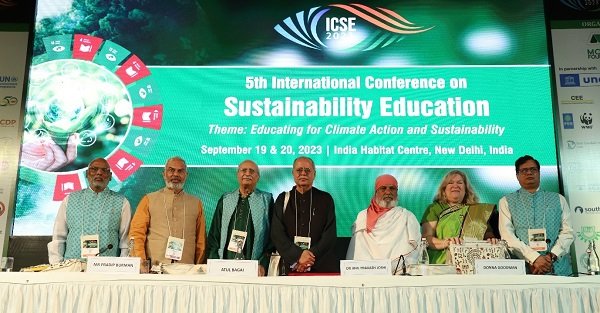
The 5th International Conference on Sustainability Education (ICSE) was organized at the India Habitat Centre in New Delhi from September 19-20, 2023 on the theme “Educating for Climate Action and Sustainability”. This landmark event witnessed a convergence of over 1000 global sustainability thought leaders, educators, entrepreneurs, policymakers, youth groups and environmentalists from across 15+ countries.

Dr. Ram Boojh, CEO Mobius Foundation, welcomed the delegates and introduced the theme of the conference while emphasising the need for immediate action to address the urgent challenges posed by climate change and environmental degradation. The inaugural ceremony featured inspiring addresses from distinguished environmentalists including Dr. Jane Goodall DBE, Founder – the Jane Goodall Institute & UN Messenger of Peace, Dr. Rajendra Singh conservationist and environmentalist (popularly known as Waterman of India), Shri Kartikeya Sarabhai Founder Director, Centre for Environment Education, Dr. Anil Prakash Joshi Founder HESCO, Donna Goodman Founder Earth Child Institute, USA, Mr. Pradip Burman Chairman Mobius Foundation, Mr. Praveen Garg President Mobius Foundation and Mr. Atul Bagai Country Head for United Nations Environment Programme’s (UNEP) India addressed the conference as chief guest.

The consensus among the speakers was a unified call to education, actionable initiatives, and a reconnection with traditional values to foster sustainability and environmental reverence. The session concluded with a gracious Vote of Thanks by Dr. Ram Boojh.

Post the ceremonials, the conference delved into pertinent discussions consisting of 8 plenary and 20 thematic parallel sessions focussing on climate and sustainability.

The session on LIFE talked about the importance of changing our lifestyles to protect the environment, emphasising learning from different fields and changing behaviours. The crucial role of new sustainability ventures that focus on practical solutions, creating value, and working together was another important session. One of the more sought-after sessions, VIRAM- Agenda Sustainability moderated by Mr. Rajdeep Sardesai, Consulting Editor and Anchor, India Today, saw a passionate discussion on the role of education in population, climate action, and sustainable development. A conclave on sustainable thought leadership stressed the need for leaders who think from the heart as an answer to the crisis of thoughtful leadership and emphasised practical knowledge.

Education, specifically pedagogy, was a major focus of the conference and discussed the urgent need to include ecosystem restoration education in syllabuses worldwide and the importance of practical knowledge, ‘students’ role in mass participation and enhanced collaboration. There was also a spotlight on successful programs like the Namami Gange Program that received global recognition for its holistic approach to ecosystem revival.

A notable session explored the role of science, technology, and innovation in leading a sustainable life, with discussions on various initiatives, such as Google’s Project Sunroof which helps individuals estimate their savings via rooftop “solar power”. Other sessions focused on citizen science, engaging communities for a sustainable future, and environmental education and advocacy to address plastic pollution.

The common recommendation of all the sessions was the role of education in achieving sustainability. Integrating environmental themes into regular studies and engaging communities informally was seen as a way to bring about positive change. The importance of grassroots efforts in green entrepreneurship was also emphasised, with discussions on exploring new markets and focusing on fundraising within the climate sector.

The Conference reached its culmination with closing ceremony, wherein Mr. Pradip Burman, Chairman of the Mobius Foundation, ardently advocated for initiating decisive, tangible actions directed at environmental conservation, prioritising them before delving into the intricacies of long-term sustainability. He also highlighted several projects that work in tandem with nature, focusing on ecological balance and conservation. Other esteemed panelists, including Ms. Bethany Davies, Research Fellow at ACER, Australia; Ms. Abimbola Junaid, Partnerships, Advocacy, and Voice Manager at Population Matters; Mr. Sanjay Awasthi, Head of Office at IOM, UN Migration; Ms. Gayatri Raghwa, Environment Education Expert at UNEP-India; Mr. Bhavesh Swami, Lead – Clean Energy Policy and Engagements at The Climate Reality Project; and Mr. Praveen Garg, President of the Mobius Foundation, emphasised on the imperative of united efforts, ecological awareness, and multifaceted strategies, involving diverse stakeholders, to confront environmental dilemmas, acknowledging the significant influence of migration and private sectors in realising sustainability objectives in harmony with the 2030 agenda. Dr. Ram Boojh, CEO Mobius Foundation extended heartfelt thanks to all dignitaries, emphasising the importance of sharing learned knowledge. He reiterated that the goal is to educate, and action and demonstration are powerful means to do so.

The conference made a clarion call for climate action and sustainability, marking a significant step forward in the journey towards a sustainable and resilient future.

Continue reading
UPSC Examination
Education

Beyond the Headlines: Mastering Current Affairs for UPSC Triumph

Mastering current affairs is a crucial aspect of UPSC Civil Services Examination preparation.

As a significant portion of the questions are influenced by current events in all stages of the exam, staying informed is not just essential—it’s a game-changer. This article presents a roadmap for aspirants, helping them navigate the realm of current affairs effectively and excel in their pursuit of qualifying Civil Services Examination.

Q: Why are current affairs important in the preparation of Civil Services Examination?

A: Current affairs form the cornerstone of the UPSC Civil Services Examination, permeating all its phases – Prelims, Mains, and the Interview. They are crucial because they help aspirants understand contemporary issues, government policies, and other events of national and international importance that often form the core of questions asked by UPSC.

Additionally, current affairs provide a real-world context for most of the static portions of the syllabus, making it easier to comprehend and remember.

Q: What are the primary sources from where exam-relevant information can be read?

A: The primary sources for current affairs include-

  • Newspapers like ‘The Hindu,’ and ‘The Indian Express,’ etc.
  • Magazines like ‘Yojana,’ ‘Kurukshetra,’ and ‘EPW’,
  • Government websites like PIB, and dedicated websites of respective Ministries, and
  • Official government documents like Economic Survey, Union Budget etc.

As the aspirants begin their preparation, any reputed newspaper or magazine can serve as a good starting point.

Q: How can one effectively cover these vast sources?

A: To avoid being overwhelmed with the vastness of sources and information, one can adopt a streamlined approach:

  1. Understanding the syllabus and nature of the Previous Year Questions (PYQs): This groundwork will give you a clear roadmap for what topics to focus on and how to approach them effectively, ensuring your preparation is closely aligned with the exam’s requirements.
  2. Regular Notes Making: Create concise notes while reading newspapers and magazines. Focus on key facts, figures, and government schemes. These notes will be invaluable during revision.
  3. Current Affairs Magazines: Subscribing to a good current affairs magazine. These magazines provide curated content that’s relevant to the exam and save you the trouble of referring to multiple sources.
  4. Why is developing the habit of newspaper reading given special importance in exam preparation? 

A: Reading newspapers as a habit helps you in several ways:

  1. Staying in the Know: Newspapers keep you in the loop about what’s happening worldwide, giving you an edge in understanding the dynamic nature of the exam.
  2. Brain Boost: It’s like a mental gym. Reading news enhances your memory, making it easier to recall crucial facts during the exam.
  3. Sharpening Skills: Dive into newspapers, and you’ll sharpen your critical analysis, develop diverse perspectives, and reading, and writing skills. These skills generally translate into higher marks.

Q: Should aspirants read newspapers Online or Offline for UPSC Preparation?

A: Deciding how to read newspapers for UPSC preparation comes down to what suits you best.

This choice can be based on what feels most comfortable and helps you understand and remember the content better during revision.

The key is to strike an optimum balance. The aspirant can go all print, all online, or a mix of both to match their learning style and preparation needs.

  1. How can the aspirant best utilize the newspaper? Is all the information published in newspapers relevant for the aspirant? 

A: To maximize the newspaper’s utility in UPSC prep:

  1. Start Simple: Begin with basic familiarity, don’t invest too much time initially (about 1 hour would be optimum).
  2. Connect the Dots: Gradually link newspaper information with your static syllabus.
  3. Deepen Understanding: As you get comfortable, use it to deepen your knowledge and complement your preparation.

Not everything published in the newspaper is relevant for the aspirant. S/he should focus on headlines and subheadings to quickly identify important news articles and their associated topics. Prioritize articles that are directly related to the UPSC syllabus.

Q: How can VisionIAS resources help aspirants in their Current Affairs Preparation?

A: VisionIAS offers a range of resources tailored to bolster your current affairs preparation:

  • News Today: This daily news analysis source provides concise and exam-oriented summaries of current events, ensuring you stay well-informed.
  • Monthly Magazine: VisionIAS’ monthly magazine is a comprehensive compilation of current affairs, helping you delve deeper into important topics while offering a consolidated view of the month’s developments.
  • Weekly Focus: These focused materials allow you to target specific issues and themes, ensuring you cover critical topics in detail.
  • PT 365 and Mains 365: These resources offer a year-round collation of current affairs, making it easier to revise before the respective examinations.
  • Other Documents: VisionIAS also provides valuable resources like Government Schemes in News, Economic Survey Summary, and Union Budget Summary etc. for further supplementing the preparation.

Q: How should the aspirant approach the current topics and information while reading the newspaper and other sources?

A: Approach the current affairs topics in totality instead of segregating them into Prelims and Mains.

Along with this, summarize key pointers, facts, and relevant data. This holistic approach ensures a comprehensive understanding, which is vital for both Prelims and Mains.

Q: Despite regular reading, students often forget. How can this be overcome?

A: The key to retaining current affairs is an effective revision plan. The following principles can be followed to create it:

  1. Integration of Static and Current Affairs: Relate current affairs to static portions of the syllabus. For instance, if you’re reading about a government scheme, connect it to relevant subjects like economics or governance.
  2. Regular Revisions: Schedule periodic revisions of your notes. This can be weekly, monthly, or as per your schedule. Regular revision ensures that the information stays fresh in your memory. The PT 365 and Mains 365 documents can be effectively used for revision.

Q: Any other exercise through which revision can be reinforced? 

A: Revision can also be reinforced with tests and discussions. Join a test series that includes current affairs questions or participate in group discussions on current affairs topics. This interactive approach enhances both comprehension and retention.

Q: How should students manage their schedule to manage Current Affairs effectively?

A: Managing one’s schedule is crucial. The following ideas can be kept in mind while designing it:

  1. Time Management: Allocate a specific time slot daily for current affairs reading and note-making. Consistency is key.
  2. Syllabus Prioritization: Prioritize current affairs topics based on their relevance to the syllabus and the weightage they carry in the exam.
  3. Balance: Maintain a balance between reading newspapers, and magazines, and revising notes. The aspirants should not overload themselves with information; focus on quality over quantity.
  4. Self-Assessment: Aspirants should periodically evaluate their progress. Are they retaining information? Are they performing well in practice tests? And adjust their schedule accordingly.

In the journey towards cracking the UPSC Civil Services Examination, mastering current affairs is non-negotiable. By following a structured approach of regular reading, note-making, and strategic revision, aspirants can conquer the vast sea of current affairs information.

“’The difference between the master and the novice is that a master has failed more times than the novice has tried.” 

Remember, it’s not just about staying updated; it’s about transforming that knowledge into a stepping stone towards your dream career in civil services.

Visit us at: http://www.visionias.in/delhi/

Or Call us at: 8468022022, 9019066066

Continue reading
Education

360DigiTMG Launches Offline Data Science Course Training Classes in Anna Nagar, Chennai

New Delhi: 360DigiTMG, a leading institute for data science and artificial intelligence training, has announced the launch of its offline data science course training classes in Chennai. The course is designed to provide students in Chennai with the skills and knowledge they need to succeed in data science which is among the rapidly growing fields in India.

Data Science has become a vital area with rewarding employment prospects. The average yearly pay for a data scientist in India is USD 12.6 lakhs, with salaries ranging from 3.7 lakhs to 25.1 lakhs. For individuals who want to succeed in this fast-paced industry, enrolling in a recognized Data Science course in Chennai is crucial.

360DigiTMG is pleased to announce the launch of its offline data science course training classes in Anna Nagar, Chennai, given the exponential development of data flow and the growing significance of data-driven decision-making in today’s business environment. Moreover, to enhance the career prospects of the course students, 360DigiTMG has joined hands with The State University of New York (SUNY).

Since its establishment in 2013, 360DigiTMG, a famous educational organization with global headquarters in the U.S. and an Indian base in Hyderabad, has dedicated itself to bridging the gap between academic aspirations and market demands. Data Science, artificial intelligence, machine learning, and other topics are among the many courses the institute offers.

Data Science Trends in Chennai

Chennai is witnessing significant growth in the field of data science, with many businesses investing in big data analytics to gain a competitive edge. The competitive pay in the sector is a direct result of the growing need for qualified data scientists.

By 2025, there will be a 30 per cent increase in demand for data scientists, driven by the exponential explosion of data brought on by cloud and IoT technologies. When moving from entry-level positions to senior responsibilities, data scientists can anticipate significant wage increases from leading firms like IBM, Accenture, JPMorgan Chase, Amex, McKinsey & Co, Impetus, Wipro, and Microsoft. Accenture has the highest salary in this industry, at Rs 19.6 lakhs annually.

Why choose 360DigiTMG for a data science course in Chennai?

360DigiTMG is a reliable source of training in data science and artificial intelligence across India. The institute has a track record of success in assisting students in starting successful data science careers.

Using the Python and R programming languages, 360DigiTMG’s Data Science Course in Chennai provides thorough instruction in all facets of the data science lifecycle. Topics covered include data exploration, data visualization, descriptive analytics, and predictive analytics. Both new students and data experts can take the course.

The 360DigiTMG data science course covers a wide range of topics, including the most recent developments in the industry. The course’s comprehensive curriculum covers the following topics:

* Data exploration and visualization

* Descriptive and predictive analytics

* Machine learning

* Deep learning

* Natural language processing

* Big data technologies

Here are some more reasons why you should choose 360DigiTMG for your data science training:

Experienced faculty

The course is taught by experienced industry professionals who use real-world case studies and examples to help students learn the concepts.

Hands-on projects

Students will also have the opportunity to work on hands-on projects to gain practical experience in data science.

Collaboration with SUNY

The State University of New York (SUNY) is the largest comprehensive university system in the United States, comprising 64 institutions dedicated to education, research, and innovation. With a mission to provide diverse educational opportunities, SUNY has been transforming lives for over 70 years through its world-class programs and alumni contributions to various fields. 360DigiTMG has partnered with SUNY for this course, and students will receive a certificate upon completion.

Key Learning Outcomes of the Data Science Course in Chennai

With a broad range of topics like statistical analysis, regression analysis, data mining, machine learning, forecasting, text mining, and more, 360DigiTMG’s Data Science Course in Chennai provides students with the skills necessary for a successful career in data science.

Students who complete the course are eligible to apply for an internship with INNODATATICS Ltd, where they will work on real projects under the supervision of seasoned mentors. To help students launch a successful career, 360DigiTMG also works with reputable placement experts and offers placement aid, résumé preparation, and mock interviews.

To assist students in keeping up with technology advancements throughout their careers, 360DigiTMG offers a pay-once, repeat-many-times option for the course certificate, which is valid for life.

360DigiTMG is a leading educational institution with a global presence, dedicated to providing high-quality training in data science, artificial intelligence, machine learning, and other emerging technologies. Dedicated to closing the knowledge gap between academics and industry, 360DigiTMG equips its students with the abilities necessary for success in the current digital era. By providing free courses, lifetime access to learning management systems, and live webinars, 360DigiTMG functions as both an educational institution and a bridge between academic quality and industrial standards. The 360DigiTMG data science course is a fantastic approach to acquiring the abilities and information required to launch a prosperous career in the quickly expanding data science industry.

For more information about 360DigiTMG’s Offline Data Science Course in Chennai and enrollment details, please visit https://360digitmg.com/india/chennai/data-science-certification-course-training-institute.

Continue reading
Education

FDPPI releases a Unified Framework for Compliance of DPDPA 2023

Foundation of Data Protection Professionals in India (FDPPI), a primer organization on Data Privacy in India responded to the Government of India passing the much-awaited Digital Personal Data Protection Act (DPDPA 2023) with the release of an industry-friendly indigenous compliance framework titled “Data Governance and Protection Standard of India” (DGPSI).

FDPPI recognizes that compliance of DPDPA 2023 is essential for thousands of organizations in India in both business and non-business category including educational institutions, industry and professional associations, etc., and noncompliance could result in heavy monetary penalties. At the same time remaining in compliance would be a concern on many SMEs and MSMEs both for the efforts required and the cost involved.

Presently the industries in such cases depend on frameworks which are expensive to implement and are adapted from foreign sources. Such frameworks are less than optimum and are also expensive.

To alleviate the problem of compliance, FDPPI has brought out a new framework titled DGPSI which is a single unified framework that combines the requirements of DPDPA 2023 and also addresses the requirements of related compliance of Information Technology Act 2000 (ITA 2000) and the Bureau of Indian Standard’s draft standard on Data Governance.

This unique combination will simplify the compliance, increase the standard of compliance in the country, and bring down the cost of compliance substantially. FDPPI has already trained many professionals to conduct both implementations of the standard as well as Certify them under the FDPPI scheme of certification.  This effort will continue in the future.

This DGPSI framework will be an alternative to the current international audit standards such as ISO 27701 and has the potential to make India the leader of the Certification of Data Privacy practice across the world.

The framework authored by Naavi, a pioneer and thought leader in the field of Cyber Jurisprudence and Privacy Jurisprudence has been fine-tuned by a team of FDPPI experts and will continue to be improved as the requirements evolve.

Continue reading
Education

Justice (Retd) K S Puttaswamy honoured

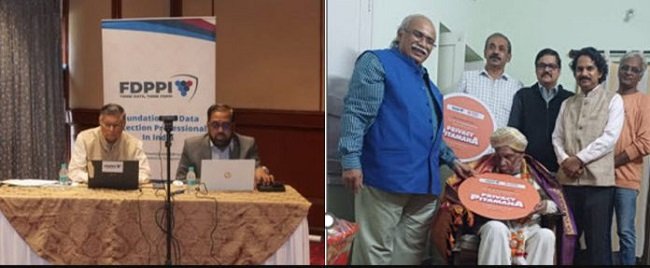
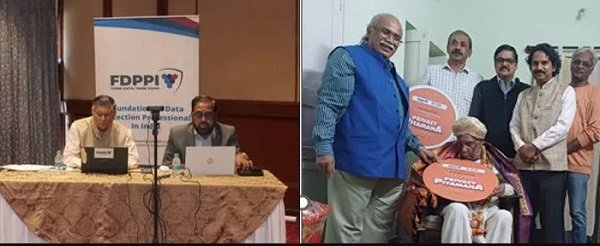
Foundation of Data Protection Professionals in India (FDPPI), a primer organization on Data Privacy in India and Manipal Law School (MLS) of the prestigious Manipal Academy of Higher Education today conferred the title of “Privacy Pitamaha” on Justice (Retd) K S Puttaswamy.

The 98-year crusader is known for initiating a petition on Privacy which has resulted in the country passing a long-awaited law on Data Protection namely the Digital Personal Data Protection Act 2023 on August 11 this year.

Privacy is a respected fundamental right under the Indian Constitution and the demand for a law to protect Privacy was pending for a long time. In 2015, Justice Puttaswamy initiated a petition on the possible Privacy infringement in the Aadhaar usage at the Supreme Court. During the discussions, the 5-member bench felt the necessity for a larger bench and a Nine-member bench was set up to decide on the issue of whether Privacy is a Fundamental Right in India. On 24th August 2017 a judgement which is colloquially referred to as “Puttaswamy Judgement” held that Privacy is a fundamental right under Article 21 of the Constitution.

Following this and three iterations of law in the form of Personal Data Protection Bill (PDPB) in 2018, 2019 and 2021, the Digital Data Protection Act 2023 (DPDPA 2023) was finally gazetted on 11th August 2023.

This brought India on the world Privacy map in the year of G20 presidentship and enhanced the prestige of the country in the international arena.

Recognizing the efforts of Justice Puttaswamy who initiated the petition when he was past 90 years of age, FDPPI and MLS have thought it fit to recognize his services to the Privacy Community with the award of the title “Privacy Pitamaha”.

Sri Puttaswamy in view of his age, received the award at his residence from Dr Avinash

Dadhich, Dean of MLS. Mr Na. Vijayashankar, Chairman of FDPPI addressed the Press Conference explaining the context in which FDPPI initiated this award. Sri Puttaswamy was virtually present in the Press Conference and briefly interacted with the audience.

Continue reading